
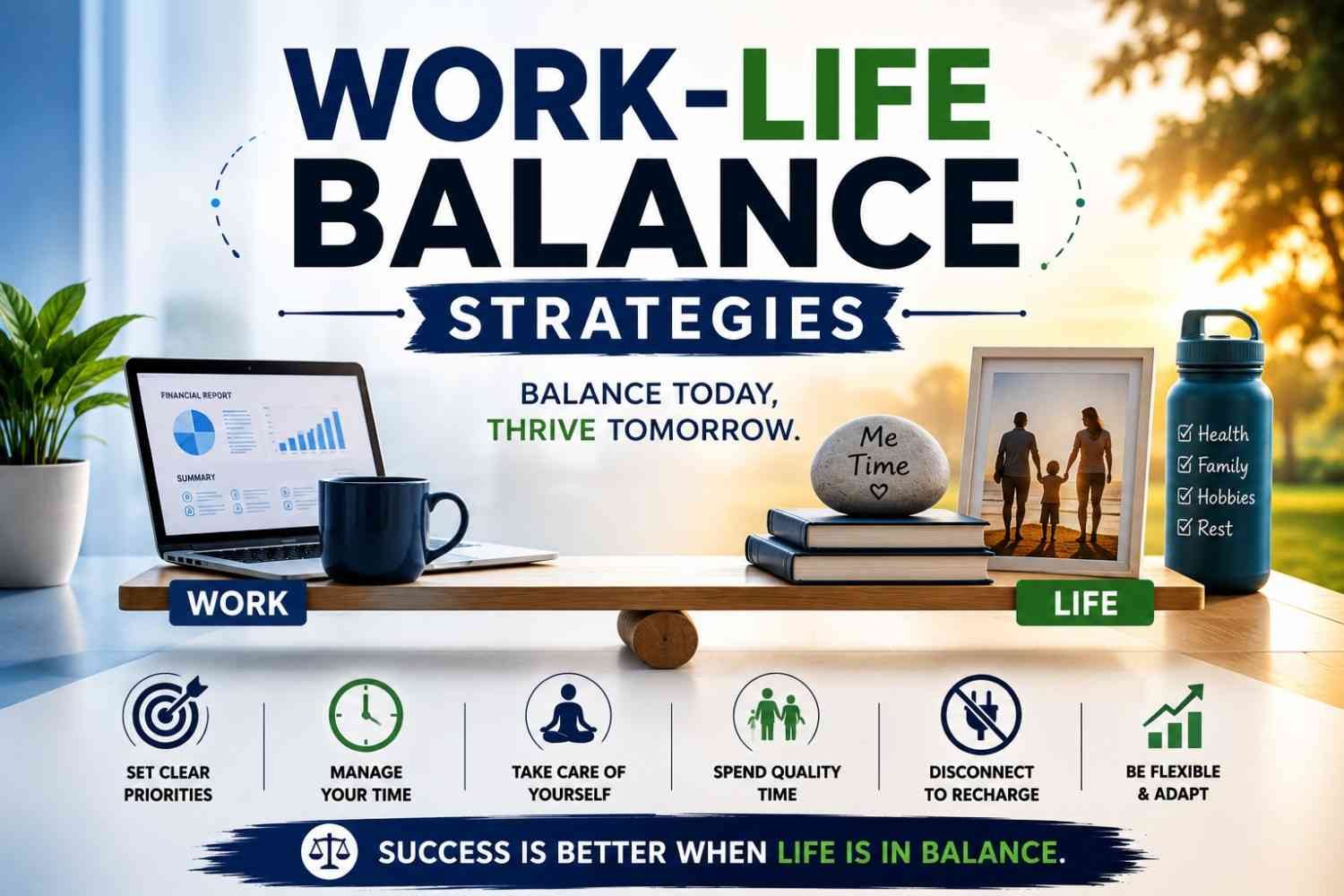
In today’s fast-paced world, keeping a decent balance between work and personal life can feel way harder than it used to be. A lot of professionals end up working long stretches, hopping into meeting after meeting, replying to messages well after office hours, and then still trying to squeeze in time for family, hobbies, exercise, and some quiet rest. And yes, working hard matters for career growth, but if you keep putting work first—again and again—without checking in with your own well-being, it can slowly turn into Stress, burnout, and even lower Productivity.
Some people think work-life balance is basically just splitting the day into two equal parts, work on one side, personal stuff on the other. But real balance isn’t really about using the same number of hours; it’s more like building a routine that lets you handle professional duties while also leaving room for your health, your relationships, and the little interests you actually enjoy. When your life feels more steady like that, you usually show up better at work, and your overall mood tends to improve too, which really affects your quality of life.
The good news is, work-life balance isn’t some mythical thing you either have or you don’t. It can be reached with careful planning and healthier daily habits. Tiny shifts—like setting boundaries, managing time wisely, taking breaks in a consistent way, and putting self-care into your schedule—can add up to a lot over time. Whether you’re working from home, in an office, or running your own business, picking the right strategies can help you stay productive without eating into your personal well-being.
In this more comprehensive guide, we’ll look at effective Work-Life Balance Strategies, talk about why they matter, and offer practical tips so you can craft a lifestyle that feels healthier and more rewarding.
Why Work-Life Balance Matters
A healthy work- life balance can help both employees and employers as well; it kinda works out. When people keep that equilibrium, they usually notice better physical health, relationships that actually feel stronger, sharper focus, and more enjoyment from the job.
Meanwhile, if someone keeps going all the time with no real rest, Stress tends to rise, motivation can fade, and overall well-being gets affected in a bad way. Finding that sweet spot between work and your personal life helps you remain powered up, more imaginative, and also better set to face daily hurdles, even when life gets messy.
Benefits of Work-Life Balance:
- Reduces stress levels.
- Improves physical health.
- Increases Productivity.
- Strengthens personal relationships.
- Enhances job satisfaction.
- Supports long-term Professional Success.
Creating balance is an investment in both your career and your personal life.
1. Set Clear Boundaries Between Work and Personal Life
One of the ways to have a good balance is to set clear boundaries between your work life and your personal life. A lot of people keep checking their work emails or doing work tasks even after they are done with work for the day. This makes it hard for them to stop thinking about work and relax.
When you make a schedule for your work hours, it helps you to separate your work time from your personal time. Once you are done with work, you can focus on spending time with your family, doing things you like, or just relaxing.
Ways to set boundaries include defining your work hours, not checking work emails after work, making a place for work, telling people when you are available, taking breaks, and protecting your personal time. Setting boundaries is good for your work and your emotional well-being.
2. Prioritize Time Management
Managing your time well helps you to finish tasks without too much Stress. Instead of trying to do many things at the same time, focus on one important thing.
Planning what you will do each day helps you to stay organized and avoid doing things at the last minute. Many successful people start their day by making a list of what they need to do and planning when they will do it. Time management tips are to plan your day, prioritize what is important, use a schedule, avoid things that distract you, finish work first, and check how you are doing regularly. When you manage your time well, you have time to do things you like.
3. Learn to Say No
A lot of people have trouble balancing work and life because they say yes to everything. While it is good to help, taking on too much work can make you very tired. Learning to say no in a way helps you to protect your time and focus on what is most important.
The benefits of saying no include not taking on too much, protecting your personal time, reducing Stress improving focus, and having more realistic expectations. Setting limits helps you to keep being productive for a time.
4. Take Breaks During the Day
Working for hours without stopping can make you less focused and more tired. Taking breaks helps to refresh your mind, make you more creative, and keep your energy up. Even a short walk, stretching, or taking a break from your computer can help you focus and reduce exhaustion.
Healthy break ideas are to stretch, take walks, drink water, breathe deeply, step away from your screen, and rest your eyes. Taking breaks helps you to be more productive.
5. Make Self-Care a Priority
Taking care of yourself is not a luxury; it is necessary for your emotional well-being. When you take care of yourself, you can do better in all areas of your life. Simple habits like eating food, getting enough sleep, exercising regularly, and doing things you enjoy help you to be healthier and happier.
Self-care habits include exercising regularly, eating balanced meals, getting enough sleep, staying hydrated, reading books, and spending time outside. When you are healthy, you can do better in your professional life.
6. Practice Mindfulness
Mindfulness helps you to focus on the moment instead of worrying about the future or past. Simple mindfulness practices like breathing and short meditation sessions can reduce Stress and improve your emotional balance.
Mindfulness practices include breathing, meditation, writing in a gratitude journal, quiet reflection, nature walks, and limiting distractions. Mindfulness helps you to be calmer and more focused.
7. Manage Stressthy Workspace
Your work environment affects your focus, comfort, and Productivity. Whether you work from home or in an office, keeping your workspace organized can help you work better. A clean and comfortable workspace reduces distractions. Helps you focus throughout the day.
Workspace improvements include keeping your desk organized, using lighting, maintaining good posture, reducing clutter, personalizing your workspace, and having comfortable seating. Small changes to your workspace can have an impact.
9. Spend Time with Family and Friends
Relationships with family and friends contribute to your overall happiness. Spending quality time with loved ones reduces Stress. Provides emotional support. Even simple activities like sharing meals, talking, or doing hobbies together strengthen relationships.
Relationship-building activities include family dinners, weekend outings, phone-free conversations, shared hobbies, celebrating milestones, and supporting each other. Healthy relationships help you to have a balance in life.
10. Embrace Flexible Work
Many companies now offer work arrangements that allow you to work from home or have a mix of home and office work. Working from home can reduce commuting time, improve your work-life balance, and give you time for personal activities when managed well.
The benefits of work include less commuting, more flexibility, better focus, better integration of work and life, higher employee satisfaction, and more personal time. Flexible work often improves both employee well-being and Productivity.
Common Work-Life Balance Mistakes
Lots of people try to do the thing, but they still end up doing things that mess up their balance.
Mistakes to Avoid:
- You should not work when you are supposed to be having time off.
- Ignoring how you feel physically is also an idea.
- You should take a break. Go on vacation sometimes.
- Do not take on much at one time.
- You should also make time for the people you care about.
- Getting rest is important, too.
If you can see that you are doing these things, then you can start to make things better.
Tips for Building Long-Term Balance
Getting your work and life in balance is something you have to keep working on. It is not something you can do once and forget about.
Best Practices
- You should look at your schedule a lot to make sure it is working for you.
- Make goals that you can really achieve.
- It is better to do a few things well than to try to do a lot of things.
- Make sure you have time for yourself.
- Think about the things you’re thankful for.
- Do things you enjoy in your time.
If you make changes and keep doing them, you will see big results over time.
Conclusion
Coming up with effective work-life balance strategies is kinda essential if you want long-term health, happiness, and Professional Success to really stick. Work is still a big part of life, sure, but it really shouldn’t chew up your physical health, Mental Health, relationships, or that personal fulfillment you’re aiming for. So you start by building some healthy boundaries, getting better at time management, doing more self-care, practically managing Stress, and yes, actually setting aside time for your loved ones. With that kind of mix, you end up with a more balanced lifestyle, not just an idea.
Also, remember that work-life balance is not the same for everyone. What’s most important is finding a routine that fits your personal goals, career ambitions, and overall well-being. If you make a few small, intentional changes and you keep going with healthy habits, over time you can lower Stress, boost Productivity, and feel more satisfied in both parts of your life, work and off-hours.
And balance isn’t about doing everything perfectly; it’s more about the choices you make, the kind that help you thrive across every area of life.
Read More : AI Innovations Everyone Should Know: The Technologies Shaping Our Future
Frequently Asked Questions
1. What is work-life balance?
Work-Life Balance refers to maintaining a healthy relationship between professional responsibilities and personal life, allowing enough time for work, family, health, and personal interests.
2. Why is work-life balance important?
A healthy balance improves Mental Health, reduces Stress, increases Productivity, strengthens relationships, and supports long-term career satisfaction.
3. How can I improve my work-life balance?
Start by setting clear work boundaries, improving Time Management, practicing Self-Care, taking regular breaks, and making time for family, hobbies, and relaxation.
4. Does remote work improve work-life balance?
Remote Work can improve flexibility and reduce commuting time, but it also requires strong boundaries to prevent work from extending into personal time.
5. Can a better work-life balance improve Productivity?
Yes. Employees who maintain a healthy balance often experience greater focus, higher motivation, better decision-making, and improved overall Productivity, benefiting both their careers and personal lives.
Leave a Reply