
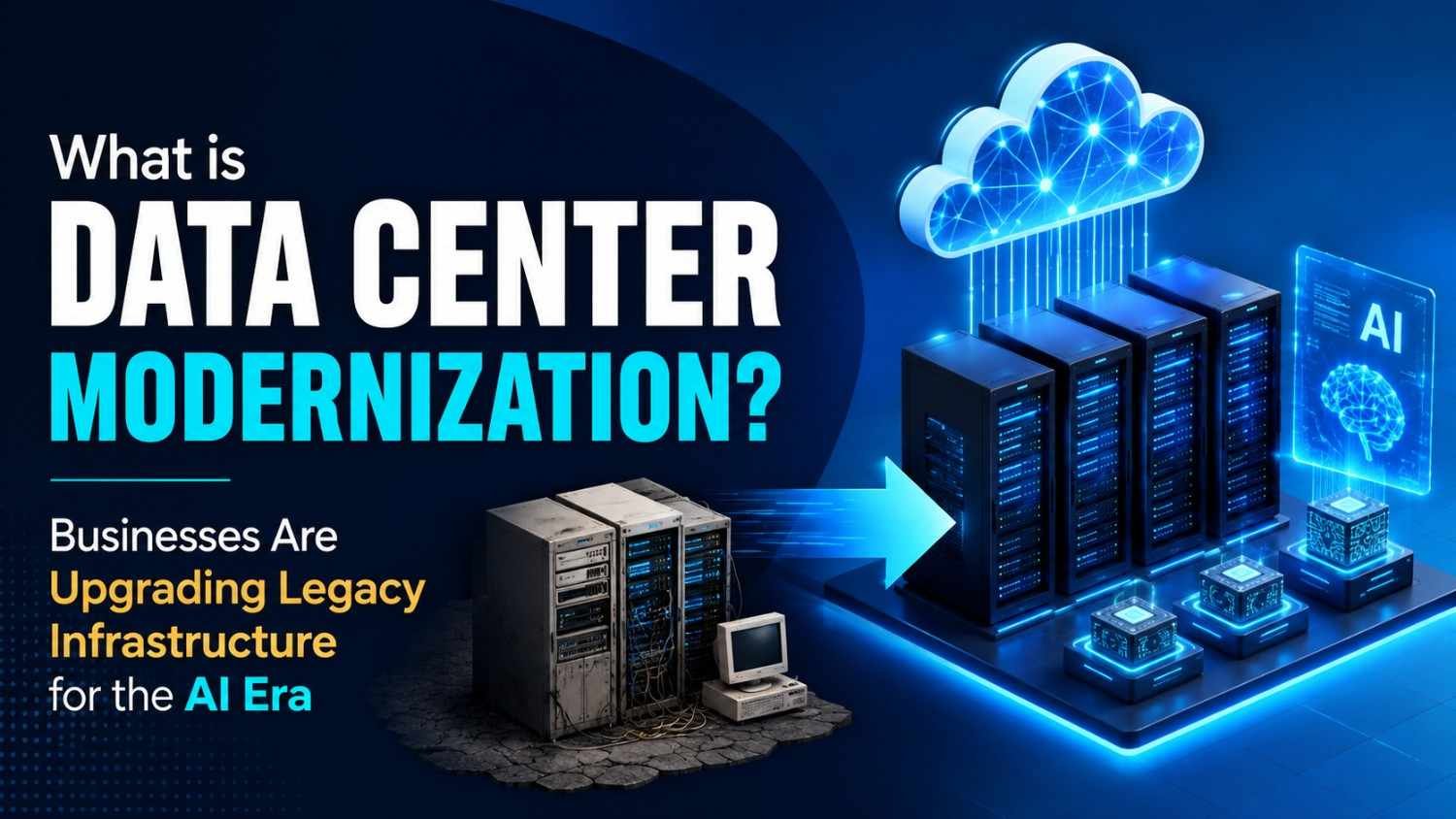
Today s businesses generate, and process more data than ever before. Artificial intelligence, cloud computing , big data analytics, IoT devices , and hybrid work environments have pushed the limits of traditional IT infrastructure much faster than people expect. Unfortunately many organizations still keep aging servers, old storage systems, legacy networking equipment, and data centers that are run in a mostly manual way. These setups were never really designed for modern workloads. As a result companies get slower performance, higher upkeep costs, more security exposure, and they hit a wall when scalability is needed. Just buying more hardware is basically not enough, organizations need infrastructure that can adjust to rapidly changing business needs, while also supporting what comes next in terms of tools and platforms. In other words, modernizing the data center has turned into a strategic business investment, not only an IT refresh.
Data center modernization means turning legacy infrastructure into something flexible, software-defined, cloud-ready and even AI-capable. It s not always about swapping everything in one moment. Most teams modernize in stages, upgrading equipment first, then moving toward virtualization , automating daily operations, tightening cybersecurity controls, and adding hybrid cloud integrations. The outcome is a platform that helps support digital transformation, while also lowering long-term operating expenses. Whether you re running a startup, a growing enterprise, or a global company, grasping data center modernization is key if you want to stay competitive in a technology-driven economy that moves quickly.
What Is Data Center Modernization?
Data Center Modernization is basically the act of upgrading legacy computing, storage, networking, and the management bits , so you can get better performance and scalability, plus more security and day-to-day operational efficiency, and also be ready for newer stuff like AI, automation and hybrid cloud. It’s more of a living strategy than a one-time hardware refresh, so it keeps going and doesn’t just stop after the install. And unlike the older style infrastructure updates that only swap out aging equipment, modernization leans toward building a flexible setup, where on premises systems, cloud platforms and edge computing resources work side by side, kind of smoothly , without friction.
Modern organizations use modernization to:
- Improve infrastructure performance.
- Increase operational agility.
- Strengthen cybersecurity.
- Reduce maintenance costs.
- Support AI and machine learning workloads.
Why Legacy Data Centers Struggle Today
A lot of businesses still run setups that were designed more than a decade ago. Even if the thing keeps working, it can gradually turn into something pretty pricey, kind of clunky in terms of efficiency, and harder to keep up with , when the business needs start to grow.
Older infrastructure usually experiences:
- Higher energy consumption.
- Frequent hardware failures.
- Limited scalability.
- Security vulnerabilities.
- Slower application performance.
- Increasing maintenance costs.
As digital transformation accelerates, these limitations become major obstacles to business growth.
The Biggest Drivers Behind Data Center Modernization
Organizations modernize their infrastructure for a few strategic reasons that go past just swapping old equipment, and honestly it’s not only that. As AI keeps getting adopted in more teams it pushes the need for massive compute resources, better networking, and fast storage systems that can handle huge datasets without stalling, or lagging too much. Then hybrid cloud strategies come into play because they require the ability to move workloads smoothly between private spaces and public cloud providers , not something manual and slow. On top of those things there are also tighter cybersecurity obligations, customers wanting faster digital experiences, sustainability targets, and the ongoing pressure to cut long term operational expenses. Basically technology moves ahead quicker than classic infrastructure cycles can keep up with, so upgrades happen more often than before.
Modern Data Centers Support AI and Advanced Analytics
Artificial intelligence has pretty much shifted enterprise computing requirements in a deep way. Training AI models , doing real time analytics, and enabling smart automation all need strong GPUs, fast storage, and high speed networking, but a lot of older setups just don’t cut it. That’s why modernized data centers are being built to handle these tough workloads while also staying adaptable enough for whatever comes next, whether it’s new tools or future technical changes.
Benefits include:
- Faster AI model training.
- Improved data processing.
- Better resource utilization.
- Higher computing efficiency.
AI readiness has become a major reason organizations modernize infrastructure.
Hybrid Cloud Has Changed Infrastructure Planning
Businesses no longer just lean on, say on-premises servers or only on public cloud environments. Instead, many organizations are moving toward Hybrid Cloud strategies , that sort of stitch both worlds together. With today’s infrastructure, workloads can run wherever they fit best, based on performance , compliance, cost, or just the overall business needs. It’s less “either this or that” and more “place it, where it behaves properly”, for the right reason.
Hybrid environments help organizations:
- Improve flexibility.
- Scale resources quickly.
- Reduce downtime.
- Support disaster recovery.
- Optimize cloud spending.
Modernization creates the foundation for successful hybrid cloud adoption.
Virtualization Improves Resource Efficiency
One of the most important modernization technologies is virtualization. Instead of assigning one physical server to a single workload , virtualization lets several virtual machines share that same hardware in an efficient kind of way. This tends to cut down on wasted computing resources, while also raising infrastructure utilization , which is really the point.
Key advantages include:
- Lower hardware costs.
- Faster deployment.
- Better scalability.
- Simplified management.
- Improved disaster recovery.
Virtualization also makes future cloud migration significantly easier.
Automation Reduces Operational Complexity
Modern data centers are using more automation rather than manual administration now, like it’s just how things go. Automated provisioning, software updates, monitoring, backup management, and resource allocation get handled quicker, with more efficiency, and less human error, which honestly adds up. With automation IT teams can spend less time keeping the infrastructure running and more time focusing on supporting business innovation, experimentation, or whatever is next.
Organizations benefit through:
- Faster deployments.
- Fewer manual errors.
- Improved uptime.
- Better operational consistency.
Automation has become a cornerstone of modern IT infrastructure.
Cybersecurity Becomes Stronger After Modernization
Legacy infrastructure usually carries unsupported operating systems, out of date firmware , and worn out hardware that quietly raise security risk. On the other hand, modern infrastructure tends to bring in stronger identity management, data encryption, continuous monitoring, zero trust security principles, automated patching, and more unified threat detection features that fit together.
Modernization strengthens security by:
- Reducing attack surfaces.
- Improving access control.
- Supporting regulatory compliance.
- Accelerating security updates.
- Enhancing threat visibility.
Security improvements alone often justify modernization investments.
Better Energy Efficiency Lowers Costs
Older servers usually use more electricity while creating extra heat, so you end up needing stronger cooling and pay more for day to day operations, kinda consistently. Newer equipment provides better compute power too but in a way that uses much less energy overall, even with the same workloads. With better cooling systems, efficient processors, and infrastructure that’s been tuned, the long run operating costs tend to drop, and at the same time it supports sustainability goals.
Organizations often achieve:
- Lower electricity costs.
- Reduced cooling expenses.
- Smaller physical footprint.
- Improved environmental performance.
Efficiency benefits continue throughout the infrastructure lifecycle.
Cloud Migration Becomes Simpler
Many businesses eventually end up shifting a few workloads over to public cloud platforms, like at some point it just happens. The modernization of infrastructure makes that move way less painful because it supports standardized management , plus virtualization, containerization, and software-defined networking. Instead of relocating every application right away, organizations can slowly migrate workloads according to what matters most for the business. Most successful Cloud Migration seems to work best when it is guided by careful planning, not by doing a fast replacement and calling it a day.
Common Challenges During Modernization
Even if modernization brings clear benefits, organizations still need to be ready for some implementation challenges that pop up during the execution phase.
These may include:
- Budget limitations.
- Legacy application compatibility.
- Staff training.
- Migration complexity.
- Downtime planning.
- Vendor integration.
Careful planning minimizes disruptions while maximizing long-term value.
Best Practices for Successful Modernization
Successful projects kinda start with business goals, not with straight up buying technology. Most organizations should look at what they already have, then decide what kind of workloads are coming next, assess the security risks that might pop up, and finally sort out which upgrades actually give measurable value. In other words, infrastructure first then decisions later.
A structured modernization roadmap often includes:
- Infrastructure assessment.
- Workload analysis.
- Security evaluation.
- Cloud readiness planning.
- Automation opportunities.
- Performance monitoring.
Strategic planning produces better long-term outcomes.
Future Trends in Data Center Modernization
Technology continues evolving rapidly, making modernization an ongoing process instead of a completed project.
Emerging trends include:
- AI-driven infrastructure management.
- Edge computing expansion.
- Software-defined networking.
- Liquid cooling technologies.
- Sustainable data center design.
- Autonomous infrastructure operations.
Organizations investing today position themselves for tomorrow’s innovations.
Who Should Consider Modernization?
Data center modernization isn’t only for big enterprises, no matter how much people say it. Small businesses or growing ones too, can get a lot out of looking at whether their current infrastructure actually fits today’s demand, and tomorrow’s as well. It’s kind of simple, but also a little neglected, so it’s worth checking.
Organizations should consider modernization if they experience:
- Increasing maintenance costs.
- Frequent downtime.
- Slow application performance.
- Growing cybersecurity concerns.
- Expanding cloud adoption.
- AI implementation plans.
Modern infrastructure creates a stronger foundation for business growth.
Key Takeaways
- Data Center Modernization upgrades legacy IT infrastructure for modern workloads.
- AI and hybrid cloud are major modernization drivers.
- Virtualization improves hardware efficiency.
- Automation reduces operational complexity.
- Modern infrastructure strengthens Cybersecurity.
- Energy-efficient systems lower operational costs.
- Hybrid cloud increases business flexibility.
- Modernization supports scalable growth.
- Careful planning minimizes migration risks.
- Continuous improvement keeps infrastructure future-ready.
Conclusion
Modern businesses kinda rely on fast, secure, scalable, and intelligent IT infrastructure, to stay competitive in a world that feels more digital every day. Data Center Modernization isn’t just about swapping out old servers anymore its more like building a flexible tech base that can actually carry AI, hybrid cloud, advanced analytics, stronger cybersecurity and other kinds of future improvements. When organizations modernize their infrastructure using virtualization, automation, cloud integration and some efficient hardware upgrades, they usually see better performance, less operational spending , more resilience, and a smoother runway for what comes next. And yeah, the companies that plan this stuff in a strategic way today will likely be in a much better spot to adjust, create new things, and grow over the years to come.
Frequently Asked Questions
1. What is data center modernization?
Data Center Modernization is the process of upgrading legacy servers, storage, networking, and management systems to improve performance, security, scalability, and support for AI and cloud technologies.
2. Why are businesses modernizing their data centers?
Organizations modernize to improve efficiency, strengthen cybersecurity, reduce costs, support hybrid cloud, and prepare infrastructure for AI-driven workloads.
3. How does hybrid cloud relate to data center modernization?
Hybrid Cloud allows businesses to run workloads across both on-premises infrastructure and public cloud environments, providing greater flexibility and scalability. Modernization enables this integration.
4. Is data center modernization only about replacing hardware?
No. While hardware upgrades are important, modernization also includes virtualization, automation, software-defined infrastructure, cloud integration, security improvements, and operational optimization.
5. What are the biggest benefits of modernizing a data center?
Businesses gain higher performance, stronger security, lower operating costs, better scalability, improved energy efficiency, and greater readiness for AI, cloud computing, and future digital transformation initiatives.
Leave a Reply