
Running a business involves more than just keeping an eye on sales and expenses, kind of. Owners also need to get a handle on what the business owns, how those resources are actually put to use , and how their value shifts across time. A company might buy computers, vehicles, machinery, furniture, buildings, or other types of equipment that it expects to keep around for several years. These kinds of purchases are not the same as the everyday costs needed to run operations, and if you treat them wrong, the financial records can get confusing pretty fast, even if nobody notices at first.
This is where fixed assets turn into a big deal. Fixed assets are long-term resources a business uses to keep operating and to help produce value, not items bought with the idea of immediate resale. Learning about fixed asset accounting, depreciation, asset valuation, and asset management can help business owners end up with more reliable financial statements and better choices when thinking about investments. Whether you’re running a small shop, a professional service firm, a manufacturing operation, or a new startup that’s building momentum, knowing what qualifies as a fixed asset is a solid part of basic business finance too.
What Are Fixed Assets?
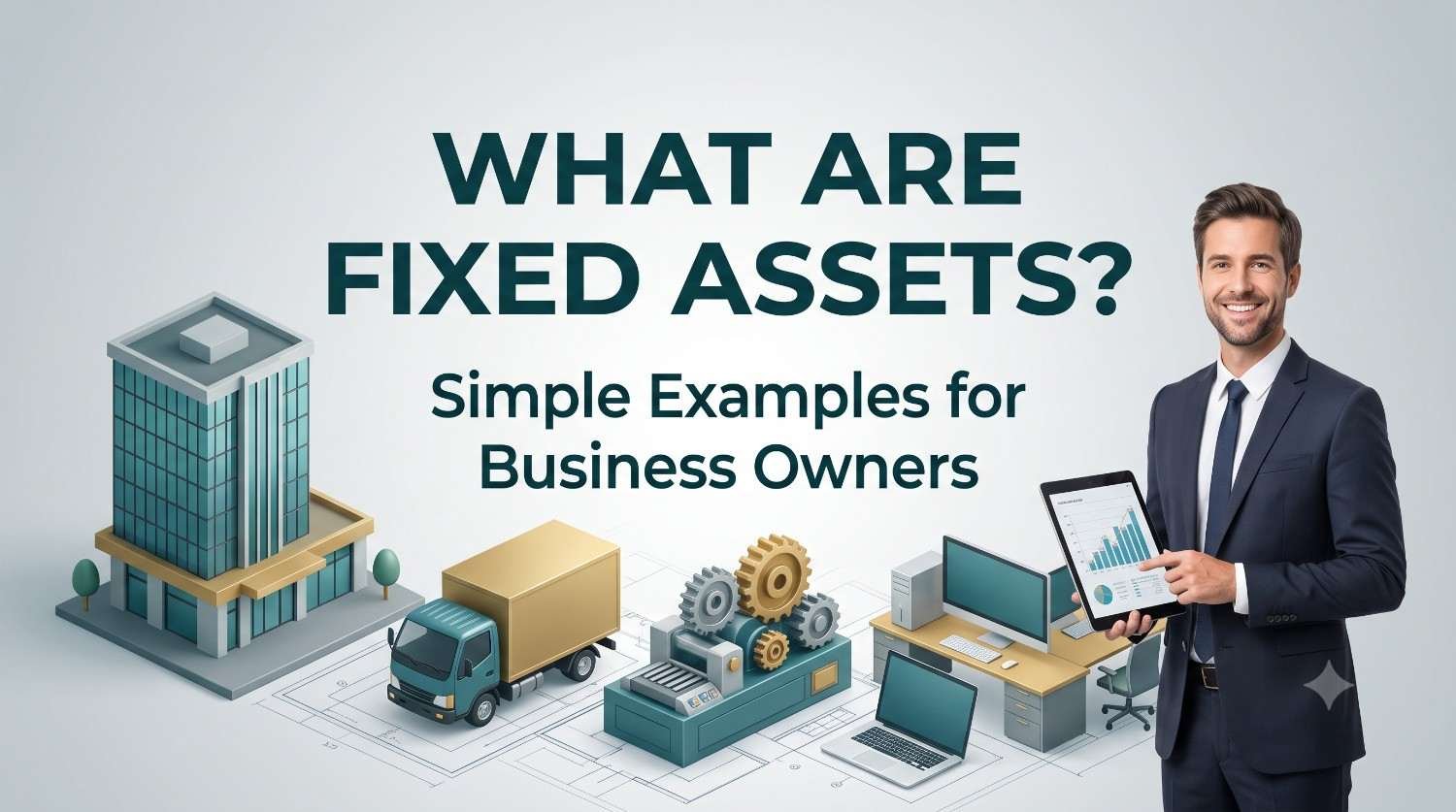
Fixed assets are tangible assets that a business owns and actually expects to use for a relatively long time, usually more than one accounting period. You will also hear them called property, plant and equipment , or PP&E. Unlike inventory, fixed assets aren’t normally bought with the idea of selling them to customers as a routine part of business operations. Instead, they help the company manufacture goods, deliver services, run operations, or support employees. In other words they tend to be kind of the work horses, not the stuff you move out quickly.
Common examples include:
- Buildings.
- Machinery.
- Vehicles.
- Computers.
- Office furniture.
- Manufacturing equipment.
- Tools and equipment.
- Land.
For example, if a bakery purchases an oven to produce bread and cakes, the oven can be considered a fixed asset because it supports business operations over an extended period.
Simple Fixed Asset Example
Imagine a small design agency buys five computers for $8,000. They’re expected to get used for a few years, kinda like an extended run not just a quick, one-off thing. The computers aren’t bought for resale, but more like for employees so they can finish client projects. Instead of just tossing the full $8,000 in the day to day bucket right away, the business can treat the computers as business fixed assets. Then it recognizes the cost gradually over their useful lives using depreciation, assuming the rules that apply, and also following the company’s own capitalization policy. This gives a better, more practical view of how the business really uses its resources across time, rather than only showing the upfront purchase.
What Are the Main Types of Fixed Assets?
Fixed assets can take many forms depending on the industry and business model.
Land
Land bought for business use is usually treated as a long-run tangible asset. In the accounts land is a bit different from most other fixed assets, because it is generally not depreciated under standard financial accounting rules, mostly since it does not really have a limited useful life like buildings or equipment do. Like, if someone purchases a parcel of land for a warehouse, an office spot, or a retail location, that land can be entered as a long-term business asset.
Buildings
Buildings used for business operations are another common type of fixed asset.
Examples include:
- Offices.
- Warehouses.
- Retail stores.
- Factories.
- Workshops.
- Commercial buildings.
Buildings normally have long useful lives, so their cost is generally allocated over time through depreciation rather than being treated entirely as a current-period expense.
Machinery and Equipment
Manufacturing businesses often lean pretty hard on machinery and equipment, it’s kinda unavoidable. Things like production machines, industrial tools, packaging equipment, commercial ovens printing equipment, and specialized machinery. These assets can become a large financial commitment so fixed asset management ,accurate records really matter.
Vehicles
Business-owned vehicles can also qualify as fixed assets when they are used in operations.
Examples include:
- Delivery vans.
- Company cars.
- Trucks.
- Construction vehicles.
- Service vehicles.
A vehicle’s purchase cost and how it’s accounted for really depend on the business’s accounting policies , plus whatever standards are actually applicable.
Computers and Technology Equipment
Technology is now tied pretty closely to day to day business operations. Computers, servers, specialized hardware, the networking gear, and other technology items can be treated as fixed assets when they fit the business capitalization thresholds. That said, it doesn’t mean every tech purchase automatically has to be capitalized. Some low-cost stuff might be handled as an expense, depending on what the company says in its accounting policy , and also on the rules that apply.
Office Furniture
Desks, chairs, storage cabinets, conference tables, and other durable office equipment may also fall under fixed assets. For instance, a company setting up a new office might buy $20,000 in desks, chairs, cabinets or storage units, and conference room furniture. If those items line up with the company’s capitalization policy, they can be written down as office fixed assets and then depreciated over the related useful lives.
Fixed Assets vs. Current Assets
If you want an easier way to wrap your head around fixed assets, compare them with current assets. Current assets are usually expected to turn into cash , be sold, or get used up during the normal operating cycle of the business, or within a relatively short time frame.
Examples include:
- Cash.
- Accounts receivable.
- Inventory.
- Short-term investments.
Fixed assets, on the other hand, are generally held for longer-term operational use.
For example, a clothing retailer’s inventory counts as a current asset, because it’s kind of meant for sale. Meanwhile the store’s display shelving can be a fixed asset, not something they plan to sell to customers. Grasping this split is important for small business bookkeeping, since different types of assets show up differently on the financial statements, kind of depending on how they’re categorized.
Fixed Assets vs. Inventory
Fixed assets and inventory can get mixed up, since they both are physical items you can see. But the big difference is the reason the business holds them. If a furniture retailer buys tables purely to sell to customers, those tables are inventory.
If that same retailer buys desks to place in its administrative office for actually running the day to day work, those desks may be fixed assets. So even when the object looks the same, the accounting labels can change, depending on the intended use.
Fixed Assets vs. Expenses
A business also has to sort out whether something is really an asset purchase, or just a regular operating expense. For instance, say a company pays $150 for routine office supplies. Those supplies are usually used up pretty fast, so they’re typically treated as an expense.
Now consider the company buys a $4,000 professional printer. If it’s expected to last for several years, then—based on the capitalization rules the company follows and on relevant accounting standards—this printer might get recorded as a fixed asset. This difference is useful, because it helps prevent expenses from being inflated or minimized in any one accounting period.
What Is Depreciation?
Depreciation is the organized allocation of the depreciable cost of a long lived asset across its useful life. In plain terms, depreciation reflects that many assets keep generating value for more than one year.
For example, suppose a business buys equipment for $10,000 and expects it to have a useful life of five years with no residual value. Under a simple straight-line approach, annual depreciation would be:
$10,000 ÷ 5 = $2,000 per year
The way accounting is handled can change depending on the asset, the accounting rules being used, the useful life, what’s left as residual value, and also which depreciation method is picked. Depreciation itself is kind of a huge concept in fixed-asset accounting ,especially for a small business.
Common depreciation methods
There are a few depreciation methods you might see, and which one fits depends on the accounting framework and also the kind of asset involved
Straight-line depreciation
With straight-line depreciation, the depreciable amount is spread evenly, more or less, across the whole useful life of the asset. It tends to be pretty straightforward and people generally understand it, without too much fuss.
Declining-balance methods
These approaches usually record more depreciation expense in the early years and then smaller amounts later on. They can make sense when an asset is more productive at first, or when it loses value faster during those earlier periods.
Units-of-production method
Here depreciation is tied to actual usage or output instead of just counting time passing. This can be really helpful for certain types of machinery, where production volume or operating hours are a better measure of how the asset is being “consumed” over time. In practice a company should select a method based on the applicable accounting guidance rather than just choosing the one that makes the financial statements look the way they want.
What is accumulated depreciation?
Accumulated depreciation is the total amount of depreciation that has been recorded on an asset since depreciation started. For example, if equipment originally cost $20,000 and the business has already recorded $8,000 in depreciation, then accumulated depreciation would be $8,000 .
The asset’s net book value would generally be:
Original Cost − Accumulated Depreciation = Net Book Value
So:
$20,000 − $8,000 = $12,000
The net book value is an accounting amount and should not automatically be interpreted as the asset’s current market value.
What Is the Fixed Asset Register?
A fixed asset register is a detailed record of a business’s long-term assets.
A well-maintained fixed asset register may include:
- Asset description.
- Purchase date.
- Purchase cost.
- Asset identification number.
- Location.
- Useful life.
- Depreciation method.
- Accumulated depreciation.
- Net book value.
- Disposal date.
- Disposal proceeds.
For small businesses with lots of assets, keeping decent records can actually make the year end accounting side of things easier , also help with audits , insurance checkups and asset planning a lot.
What Is a Capitalization Policy?
A capitalization policy basically tells a business when a purchase is logged as an asset instead of just being treated as an expense. For instance, a firm may set a dollar limit or monetary threshold for capitalization , as long as it still follows the relevant accounting requirements. A cheaper office supply or small accessory might be written off right away, while a pricier computer server could be capitalized and then depreciated.
The exact threshold should be selected based on the accounting framework you’re using , plus the tax rules and the company’s own accounting approach. Staying consistent matters, because if you switch the treatment from one period to the next, the financial info becomes harder to line up or compare.
What Costs Can Be Included in a Fixed Asset?
The cost of a fixed asset often covers more than the invoice amount. In line with the accounting guidance , directly attributable costs that are necessary to bring the asset to the place and the condition needed for its intended use may also be included .
For example, machinery costs could potentially involve:
- Purchase price.
- Delivery.
- Installation.
- Certain directly attributable setup costs.
- Testing costs where applicable.
Routine repairs, and maintenance are usually handled in a different way from each other, because they tend to keep an asset in working order rather than actually create or strengthen a long-term asset. Businesses should use the right accounting standards when figuring out what costs should be recorded as capital.
Repairs vs. Improvements
This split can matter a lot more than people think. Routine maintenance basically keeps an existing asset operating in its current state, like it’s still the same general “capacity and condition.” So, for instance, swapping out a worn filter, or doing the usual servicing on a machine, would normally be treated as an operating expense.
An improvement, on the other hand, is more likely to bump up the asset’s capacity, extend its useful life, or increase functionality. For example, a major upgrade that substantially increases production output from machinery might need a different accounting approach. The precise treatment depends on the facts and on the relevant accounting rules that are applicable in that situation .
How Fixed Assets Appear on a Balance Sheet
Fixed assets are generally presented within the non-current assets section of a balance sheet.
A simplified presentation might look like:
| Asset | Cost | Accumulated Depreciation | Net Amount |
| Equipment | $50,000 | $15,000 | $35,000 |
| Vehicles | $40,000 | $12,000 | $28,000 |
| Furniture | $15,000 | $5,000 | $10,000 |
The presentation can vary depending on the accounting framework and financial reporting requirements. The important concept is that long-term assets are shown separately from short-term operating resources.
Why Fixed Assets Matter for Business Owners
Understanding fixed assets can help owners make better financial and operational decisions.
A business needs to know:
- What assets it owns.
- Where those assets are located.
- How much they originally cost.
- How much depreciation has been recognized.
- When assets may need replacement.
- Which assets are no longer being used.
- How much capital is tied up in equipment and property.
This information supports business asset management and long-term financial planning.
How to Manage Fixed Assets Effectively
Good asset management does not end after an item is purchased. Businesses should regularly review their asset records and physical assets.
Maintain Accurate Records
Record purchases promptly and keep invoices, contracts, warranties, and ownership documents organized.
Perform Periodic Physical Checks
Compare the fixed asset register with the assets physically present at business locations.
Track Asset Locations
Knowing where equipment and technology are located can reduce loss and improve accountability.
Review Useful Lives
Useful-life estimates should be reviewed when circumstances change and according to applicable accounting requirements.
Plan Replacements
Old equipment can create maintenance costs and operational interruptions. Asset records can help businesses plan replacement spending before failures occur.
What Happens When a Fixed Asset Is Sold?
Businesses sometimes sell, exchange, abandon, or just otherwise dispose of fixed assets. When that happens the business generally needs to strip the asset out, like remove its original cost and the accumulated depreciation from the accounting records, then figure out if a gain or a loss has shown up.
Say the equipment has a net book value of $6,000, and it’s sold for $7,500. In that case, the business may recognize a $1,500 gain, though it’s still subject to whatever accounting treatment applies. But if it sells for $4,000, there may be a $2,000 loss instead. So yeah this is why fixed asset tracking matters, even after depreciation has really piled up.
Common Fixed Asset Mistakes
Small businesses can make several mistakes when managing long-term assets.
Treating Every Purchase as an Expense
This can distort financial statements when significant long-term assets are expensed immediately without considering applicable accounting requirements.
Capitalizing Every Purchase
The opposite mistake can also create unnecessary complexity. Low-value or routine purchases may appropriately be expensed according to the business’s policy and accounting rules.
Forgetting Depreciation
Failing to record required depreciation can overstate the carrying amount of assets and understate expenses.
Losing Asset Records
Missing invoices, purchase dates, or asset details can make accounting and audits more difficult.
Ignoring Disposed Assets
Assets that have been sold, scrapped, or removed from service should be properly reflected in the accounting records.
Fixed Assets and Taxes
Fixed asset accounting and tax accounting are related, but honestly they aren’t always identical. In financial statements you might see one depreciation approach, while tax rules can rely on another method entirely. Useful lives, caps, limits, or even certain incentives can be different too. For example, in some jurisdictions you can get accelerated depreciation, or specific deductions, for business assets that qualify.
So business owners shouldn’t just assume that what shows up as depreciation for accounting books is also the same amount they can deduct for tax purposes. A qualified accountant , or a tax professional, can help map the right tax treatment for a given asset, and for the particular jurisdiction involved.
Examples of Fixed Assets by Business Type
Different industries depend on different long-term assets.
Retail Business
A retail store may have:
- Store fixtures.
- Shelving.
- POS hardware.
- Computers.
- Security systems.
- Delivery vehicles.
Restaurant
A restaurant may own:
- Commercial ovens.
- Refrigerators.
- Freezers.
- Furniture.
- Kitchen equipment.
- Delivery vehicles.
Construction Company
A construction company may have:
- Heavy machinery.
- Trucks.
- Power tools.
- Trailers.
- Specialized equipment.
Professional Services Firm
A professional services company may have:
- Computers.
- Servers.
- Office furniture.
- Printers.
- Leasehold improvements where applicable.
These examples show why business asset examples can vary significantly by industry.
Fixed Assets and Business Growth
Fixed assets can have a pretty big part in how a company grows. Like, a manufacturer that keeps expanding may suddenly “need” new machinery to boost output. A logistics business might buy a few more vehicles, and a technology firm could put money into servers and specialized tools. In general, those kinds of purchases can raise overall capacity, but at the same time they also lock up capital, so cash is harder to move around right away.
Before an owner or leadership team buys a major asset, it’s smart to look at the expected financial return too, and also the financing cost, plus ongoing maintenance needs. They should also think about useful life , and how the whole thing will affect cash flow. That’s why fixed asset investment choices sit right inside broader business planning, not off to the side.
Fixed Assets vs. Intangible Assets
Not every long-term business resource is something you can touch. A patent, trademark, copyright, a software license, or certain development costs, may count as an intangible asset depending on the accounting rules that apply. Fixed assets are usually tangible , meaning there’s physical substance. Intangible assets, on the other hand, don’t. This difference matters because the accounting treatment for intangible assets can be noticeably different from the way companies handle property, plant, and equipment.
A Simple Fixed Asset Checklist for Owners
Before recording a major business purchase, consider:
- Is the item intended for long-term business use?
- Is it purchased for operations rather than resale?
- Does it meet the company’s capitalization policy?
- What is its expected useful life?
- What costs are directly attributable to getting it ready for use?
- How should it be depreciated?
- Where will it be located?
- Who will be responsible for it?
- How will it be tracked?
- What are the applicable tax rules?
These questions can help create a more organized fixed asset management system.
Conclusion
Fixed assets are basically long term tangible resources businesses depend on to run operations and create returns, with equipment, machinery, vehicles, buildings, computers, furniture and other qualified property in the mix. Getting fixed assets right helps business owners tell apart long-term investments from inventory and those daily out-of-pocket expenses. It also supports keeping proper financial records , figuring out depreciation, monitoring asset values, and getting ready to plan future capital spending.A good fixed asset register, paired with steady accounting policies, can make it less of a hassle to manage business resources and see where the company capital is actually flowing. Even though the core ideas sound simple, companies should still follow the accounting and tax rules that match their jurisdiction and the reporting framework they use when they record major assets.
Frequently Asked Questions
1. What is a fixed asset in simple terms?
A fixed asset is a long-term tangible resource a business uses to operate rather than something it normally buys for immediate resale.
2. What are five examples of fixed assets?
Common examples include land, buildings, machinery, vehicles, and computers. Office furniture and specialized equipment can also qualify.
3. Are computers fixed assets?
Computers can be fixed assets when they are used for business operations over an extended period and meet the company’s capitalization policy and applicable accounting requirements.
4. Are fixed assets depreciated?
Many fixed assets with finite useful lives are depreciated over their useful lives. Land is generally not depreciated under standard financial accounting because it is typically considered to have an indefinite useful life.
5. Why is a fixed asset register important?
A fixed asset register helps businesses track asset costs, locations, depreciation, carrying amounts, and disposals, making financial and operational asset management more organized.
Leave a Reply