
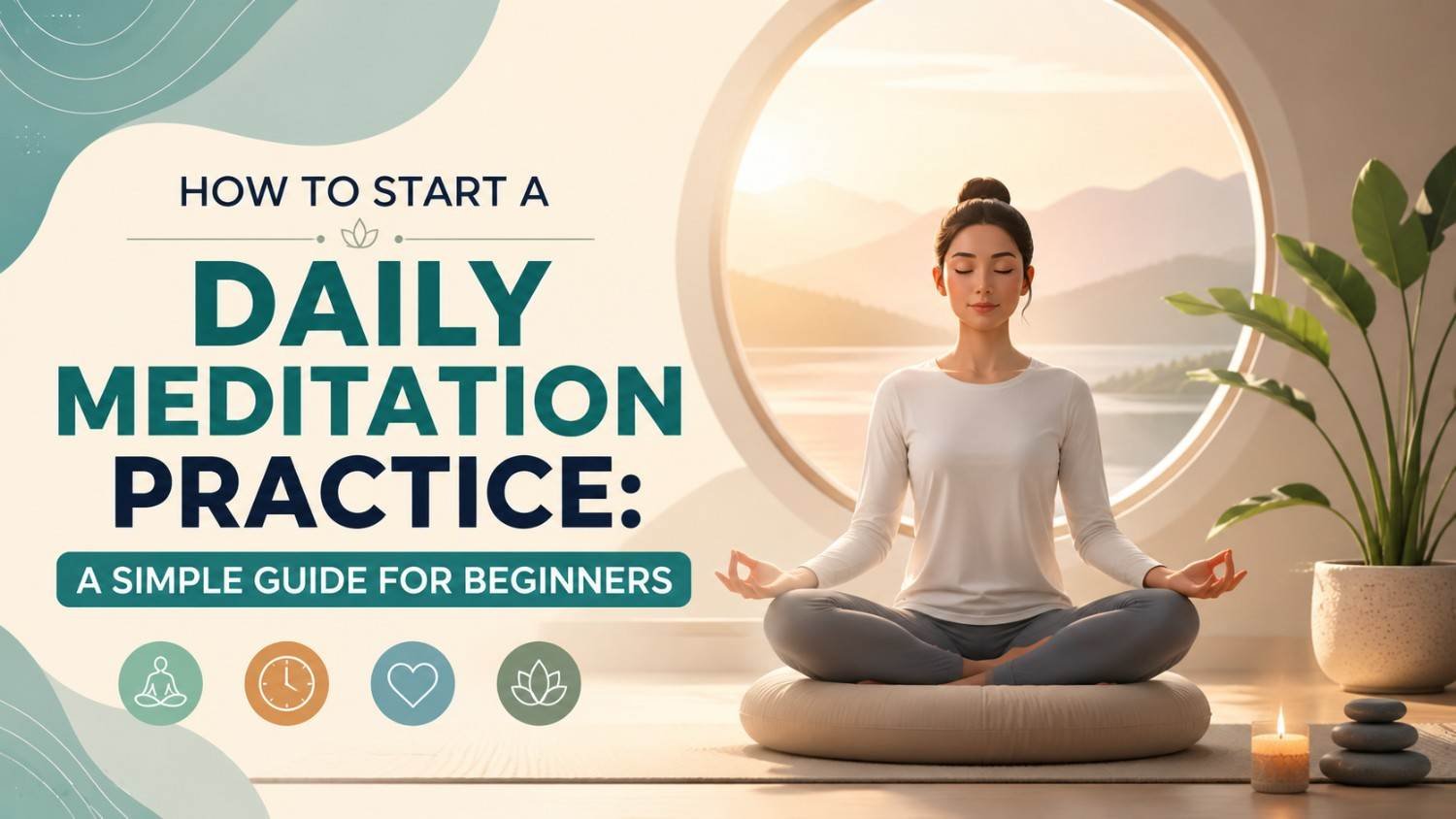
Modern life almost never gives the mind much time to genuinely slow down. Work messages, social media, responsibilities, deadlines, family commitments, and those constant little notifications can keep you mentally occupied even while your body is resting. A lot of people already know that meditation might help create more calm and awareness, still they find it hard to start, because they think they need a perfect place, a special body arrangement, or some long stretch of uninterrupted time. So the outcome is pretty much the same: meditation stays an idea they “plan” to try, not something they actually do.
To start, you do not have to make it complicated. The article points out that beginners can make meditation a lot easier by picking a comfortable setting, choosing a natural posture, setting a believable time, starting with small aims, and prioritizing consistency over perfection. A daily meditation habit can begin with just a few quiet minutes, and over time it turns into something you can realistically maintain in your day. The point is not to delete every thought, or to become perfectly serene. The aim is more like practicing noticing where your focus goes, and then, gently returning it to the present moment, again and again.
What Is Meditation?
Meditation is a practice where you, sort of intentionally steer attention and build awareness around thoughts, sensations, feelings, breathing, or even that immediate, present moment type of thing. There are lots of meditation traditions and techniques, so there’s not really one single approach that works for everyone, ya know. For a beginner it can be pretty simple, like sitting in a comfortable way and just keeping track of natural breathing for a few minutes. When the mind wanders, you notice, that it drifted off, then you gently bring your attention back to the breath. The returning isn’t a mistake, it’s kind of the whole practice doing its thing.
Why start a daily meditation practice?
The most helpful reason to meditate is usually not about chasing a specific feeling every time you sit down. Some sessions might feel calm and spacious, while other ones feel restless or kind of scattered, like your attention is in another room. When you practice consistently, you get this chance to watch your mental habits unfold, without instantly reacting to each thought that pops up. A lot of research on mindfulness and meditation has looked at possible effects related to stress, anxiety, attention, and emotional well-being, but the results don’t always match up the same way for everyone, or across all styles. So it’s better to treat meditation like a caring support for wellness rather than a guaranteed fix for every problem.
Choose a Simple Place to Meditate
Your environment can affect how easy it is to really concentrate , and honestly it’s not always about having the “perfect” setup. You do not need a dedicated meditation room, expensive cushion, candles, or special decorations. A calm corner in your bedroom, living room , balcony, or some other comfortable spot can be enough. The reference guide suggests picking a place where you get a bit of privacy , and where interruptions are limited , and if that helps, build a small ritual around the practice so you can settle into it. The key is simply that the location is practical enough that you actually use it again and again , not just admire it from afar.
Make Your Meditation Space Comfortable
Comfort is more important than appearance when you are just beginning. If your back hurts, your legs feel off , or you keep adjusting your position , it becomes much harder to focus. You can sit on a chair, cushion , sofa, or even the floor, depending on what feels right for your body . You don’t have to force yourself into a traditional cross-legged or lotus arrangement. A posture that lets you stay reasonably alert is often a better launch point than trying to copy an advanced meditation pose.
Find a Time That Fits Your Life
There is no single meditation time that everyone has to follow. Some people like the morning , because the surroundings are quieter, and others prefer an evening practice, to help shift away from the day’s momentum. The reference article also says to choose a time that matches your personal responsibilities , rather than squeezing yourself into an awkward schedule. The most effective time is usually the one you can repeat consistently , even if it’s not the “ideal” one.
Start With Five Minutes
One of the biggest mistakes beginners make is setting an unrealistic target, like deciding you will meditate for thirty minutes every morning, and then later you kind of find out that keeping that routine is difficult. A five-minute session may seem almost too short, but it can be easier to do again and again. Once the practice becomes familiar, you can gradually raise the duration if you still want. The reference article also says to start with goals that feel doable , then build up over time instead of getting discouraged because the target was too ambitious
Try This Simple Breathing Meditation
A basic breathing meditation can be a practical starting point for Meditation for Beginners. Sit in a comfortable way and let your body settle. Close your eyes if that feels fine, or keep them softly focused on one point. Bring your attention to your natural breathing without trying to push the breath into a specific cadence. Notice the sensation when you breathe in and breathe out. When you realize your attention wanders toward a thought, a sound, a memory, or a future task, just notice it, and gently bring your awareness back to the breath.
Do Not Try to Stop Your Thoughts
A common misconception is that good meditation means having an empty mind. Thoughts are a normal part of being human. When you sit quietly, you might suddenly remember an unfinished task, replay a conversation, think about tomorrow, or notice an emotion you had been brushing off. Rather than fighting every idea, try noticing it without immediately chasing it. Then return your attention to your chosen anchor. This approach can make Mindfulness Meditation feel less like a battle against your mind and more like a simple skill, training awareness.
Expect Your Mind to Wander
Your attention will wander, and that’s kind of normal, especially at the start when you’re still new to meditation. You might notice you are thinking about food, work, relationships, shopping, messages, or random memories that seem to come out of nowhere. The key moment is the instant you realize you’ve become distracted, and not just when you feel calm. Every single time you notice it, then return—return again—you’re basically training attention. The reference article gets that across too, it stresses that distractions are expected and that you can bring your awareness back again and again to whatever you chose as the focus.
Focus on Consistency Instead of Perfection
A meditation routine becomes more sustainable when you stop grading each session as if it’s a performance. Some days you will feel steady, calm, and focused. Other days your mind might seem unusually loud, like it refuses to cooperate. But neither kind of session has to count as a failure. The real point of consistency is to make meditation into something familiar, not an occasional habit you only remember when you’re stressed. Think about it like building a small, sturdy habit in the background. A short session done regularly can be more effective and sustainable than a great session that happens just once every couple of weeks.
Attach Meditation to an Existing Habit
If you’re busy, a practical approach is to link meditation with something you already do. For example you could meditate after brushing your teeth, before breakfast, after making your morning coffee, after you get back from work, or right before your evening routine. This way, you don’t have to keep making a brand new decision every day. That existing activity acts like a gentle cue, a reminder that it’s time to meditate.
Use Guided Meditation If You Need Structure
Some beginners find silent meditation kind of difficult, because they arnt totally sure what they’re supposed to do. A guided meditation can give you clear instructions and also a calmer sense of structure, but it might still feel odd at first. Meditation apps and audio programs can walk you through breathing, body awareness, visualization, or other helpful techniques. The reference article also recommends using smartphone apps as a support for guided practice while cutting down on unrelated notifications during meditation. Just choose a kind of guidance that feels natural to you, don’t automatically assume the most popular method is automatically the right one for your mind.
Create a Short Morning Meditation Routine
A morning practice can work really well, especially if your day has space for a handful of uninterrupted minutes. After waking, sit somewhere comfortable, before you go straight into emails, social media , or other pings. Spend a few minutes noticing your breathing and checking in with how you feel. You do not have to make the session elaborate or fancy. The point is simply to form a small pocket of intentional focus before the rest of the day starts becoming demanding.
Try Evening Meditation
If mornings are too packed, evening meditation may be less stressful, or just easier. You can use a few minutes to transition from work or daily duties into a quieter part of your night. Sit comfortably and observe your breathing, body sensations, and thoughts, without trying to solve every issue that shows up. If you usually drift off or get sleepy during meditation, try sitting more upright rather than lying down.
Meditation Does Not Have to Mean Sitting Still for Long
Meditation can take different forms, and honestly it feels like it depends on the person. Some people prefer seated breathing meditation, others find walking meditation, body-awareness exercises, or mindful everyday activities a bit more reachable, you know. A mindful walk, for example, can include deliberately paying attention to your surroundings, the way your body moves, how your feet touch the ground, and what sensations show up with breathing. The key part is intentional awareness more than just doing the action on autopilot, like without noticing anything really.
Build a 7-Day Beginner Meditation Routine
A simple first week can look like this:
Day 1: Practice for five minutes and focus on your breathing.
Day 2: Repeat the five-minute practice without worrying about distractions.
Day 3: Add awareness of sounds around you.
Day 4: Notice your body and areas of tension while continuing to breathe naturally.
Day 5: Practice noticing thoughts without following them.
Day 6: Try a short guided meditation if you want additional structure.
Day 7: Repeat the technique you found easiest and reflect on how the practice felt.
The purpose of this routine isn’t to crank out dramatic results in one week. It’s more like, helping you get familiar with things and lowering that psychological wall around actually starting.
Keep a simple meditation journal
A meditation journal can help you notice patterns without turning the whole practice into another kind of performance metric. After each session, you can jot down one or two quick observations, not a full report or anything.
For instance, note if you felt restless, focused, tired, calm, distracted, or just neutral. You might also record how long you practiced. Try to avoid turning every session into a strict “ good “ or “ bad “ label. What you write tends to help most when it mirrors what really happened, not what you think should have happened.
What if you keep getting distracted?
Getting distracted is basically one of the most typical hurdles when you’re learning how to meditate as a beginner. Instead of getting irritated, adjust the length if you need to, and pick one single point of attention. The breath is often convenient, because it’s right there wherever you are. When your mind drifts off, use a gentle little sequence: notice, acknowledge, return. You don’t have to scold yourself for getting distracted. The return, is the actual practice.
What if you miss a day?
Missing one day doesn’t mean the routine has failed. Life gets unpredictable, period. You might have a deadline, travel, family responsibilities , or you simply forget. Rather than deciding that you’ve “ broken “ the habit, just come back the next day. Real consistency is built through many little returns, not through perfection.
Make Meditation Easier to Maintain
If your routine keeps failing, look at the routine itself not yourself blaming. Maybe the session is too long, or the timing feels weird. Perhaps the time is inconvenient, your place is noisy, or the technique you choose isn’t a match for you in practice. Try changing just one variable at a time—don’t swap everything at once, unless you really have to. You could make the session shorter, move it to another hour, use a chair instead of the floor, or try guided meditation as a variation. The best routine is the one that fits your real life, not some ideal version in your head.
Common Meditation Mistakes to Avoid
Beginners often make meditation harder than necessary.
Expecting Immediate Results
You may not notice dramatic changes after your first few sessions. Give the practice time.
Trying to Control Every Thought
Thoughts will appear. Notice them and return to your focus.
Choosing an Unrealistic Duration
A routine you can maintain is generally more useful than an ambitious routine you quickly abandon.
Copying Someone Else’s Practice
Your posture, time, technique, and environment can be different from another person’s.
Treating Meditation Like a Performance
Meditation is not a competition. You do not have to achieve a particular mental state every time you sit down.
Understanding the Potential Meditation Benefits
People practice meditation for all kinds of reasons, like relaxation, better attention, self awareness, stress management, or just making a little break in the middle of a busy day. The benefits can look different for each person, it depends on the technique , how often you do it, and the wider situation you are in. Also meditation should not be treated as a stand-in for professional care when someone is dealing with serious physical or mental health difficulties. For general wellness though, a steady mindfulness habit can offer a kind of organized pause, where you notice what’s happening inside you, and gradually become more deliberate about where your attention goes.
When Meditation Feels Uncomfortable
Sometimes quietly watching your thoughts can pull up uncomfortable feelings or old memories. If meditation keeps ramping up distress, anxiety , or general emotional unease, don’t just assume you need to meditate more. It may be better to stop the practice, and talk through what you experienced with a qualified healthcare or mental-health professional. Meditation is deeply personal, and there’s no obligation to stick with a specific approach if it doesn’t feel fitting for you.
A 10 Minute Daily Meditation Template
Once five minutes feels okay, you might try an easy ten minute structure. In the first minute, settle into your posture, then just notice what is around you. For the next several minutes, observe natural breathing, without trying to alter it. After that, spend a few minutes paying attention to thoughts, sounds, and body sensations, while gently coming back to your breath whenever your mind wanders. Finish with the last minute, check in with how you feel before you end. There’s no need to push yourself into feeling calm, or somehow “different”.
How to Make Meditation Part of Your Lifestyle
Meditation can feel more meaningful when it does not stay stuck, isolated, from the rest of your day. You can slide mindfulness into regular moments, like eating, walking, showering, drinking tea, or even just talking with another person. Instead of doing the activity while your mind is mentally jumping between several unrelated things, pause and deliberately notice what is actually happening right now. In a way, this can make mindfulness feel larger than those few minutes where you sit quietly and “try” to be still.
Focus on Progress, Not Perfection
For a beginner, the biggest mindset shift is patience. You might begin with only five minutes. Some sessions feel calm and steady, others may feel a bit chaotic, like your attention keeps slipping away. You may notice yourself wandering again and again, and honestly that’s completely normal. The practice is not about building some forever-quiet mind. It’s more about getting familiar with where your attention goes, and then learning to bring it back in a gentle way. Gradually, those small flashes of deliberate awareness can turn into a routine you start doing automatically through the day
Conclusion
Starting a daily meditation practice does not mean you need a perfect room, a complicated posture, expensive gear, or long stretches of free time. A comfortable spot, a few minutes, steady natural breathing, plus the willingness to return to the breath when your focus wanders is enough to begin. The key is picking a realistic rhythm that actually fits your life, then repeating it consistently, instead of trying to reach some ideal on the first attempt. As the reference guide also stresses, beginners can make meditation feel more approachable by choosing a helpful setting, finding a posture that feels sustainable, picking a practical time, setting smaller aims, and building consistency. With patience and reasonable expectations, meditation can become a simple daily pause that supports more awareness and intentionality.
Frequently Asked Questions
1. How long should a beginner meditate each day?
A beginner can start with around five minutes and gradually increase the duration if it feels comfortable. The most important factor is creating a routine that you can realistically maintain.
2. What is the best time to meditate?
There is no single best time for everyone. Morning, evening, lunch breaks, or another quiet period can work as long as the timing fits your schedule and allows regular practice.
3. What should I do when my mind wanders during meditation?
Notice that your attention has wandered without criticizing yourself. Gently bring your attention back to your breathing or chosen focus.
4. Can I meditate while sitting on a chair?
Yes. You do not need to sit in a traditional meditation pose. A comfortable, stable posture that allows you to remain reasonably alert can work well for beginners.
5. Does meditation require an empty mind?
No. Having thoughts during meditation is normal. The practice involves noticing thoughts and returning your attention to the present rather than trying to eliminate thinking completely.
Leave a Reply