
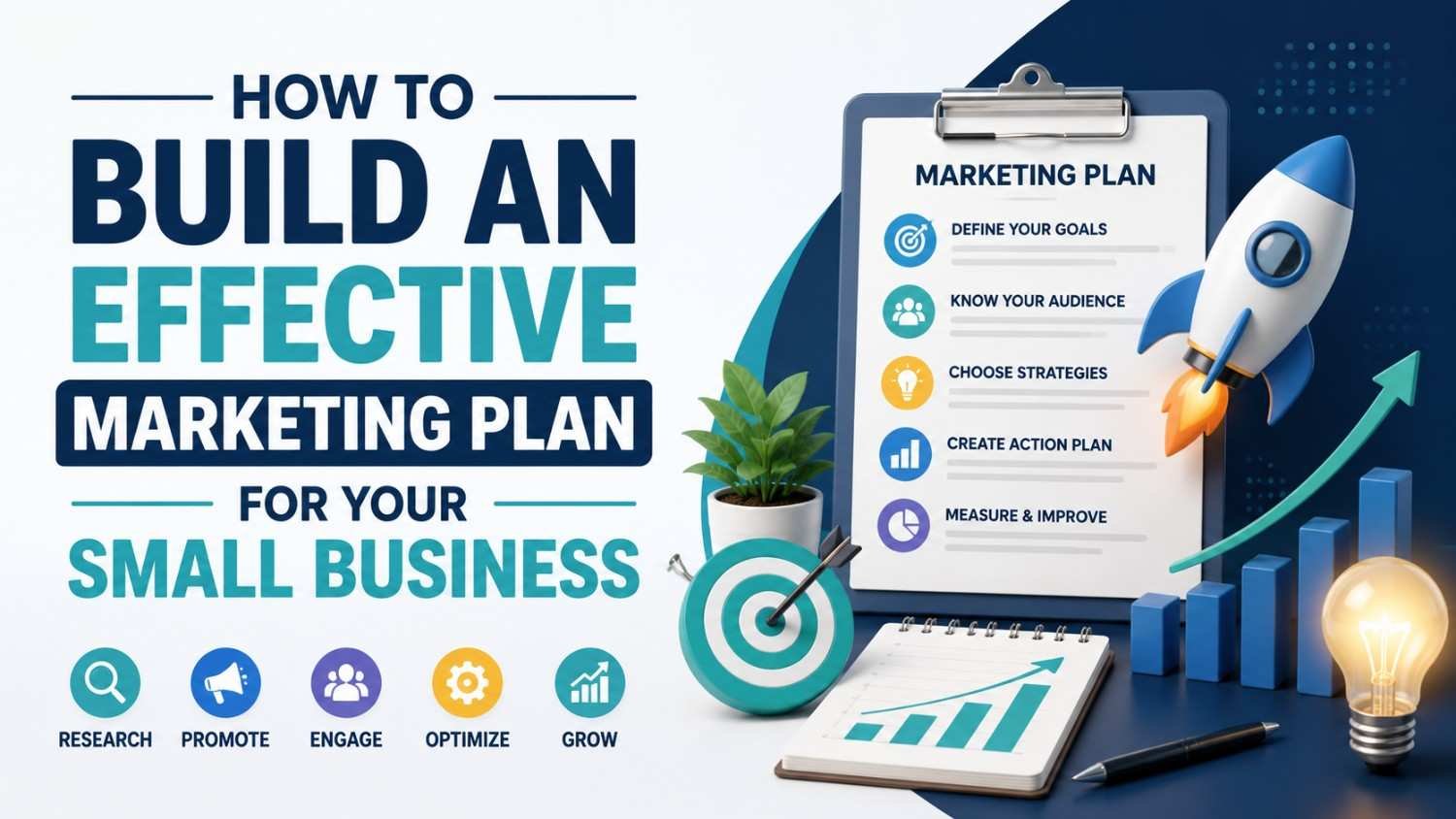
Growing a small business takes more than simply giving really good products or services. Even strong businesses can get stuck if potential customers don’t know what’s on offer, or they don’t really get why the business is different from other competitors. And that’s kinda where a well-structured marketing plan comes in , because it’s basically like a guide that helps a business figure out who they want to reach , how to explain their value clearly, how to spend money and time in a smart way, and how to reach growth that you can actually measure. If there’s no clear direction, marketing can turn into this inconsistent mix of things, and then you end up with wasted time, unneeded costs, and opportunities that just quietly slip away. So whether you’re starting up from scratch, or you’re trying to grow a current business, a thorough marketing plan can really boost your odds for long-term success.
An effective marketing plan doesn’t need to be overly complex, nor does it require a huge budget. What matters most is understanding your customers better, setting goals that make sense, selecting the right marketing channels, and then checking the results often so you can improve along the way. Small businesses that keep reviewing what they’re doing with marketing are often in a better spot to adjust when market conditions shift, customer preferences change , or competitors start moving. In this guide, we’ll go over How to Build an Effective Marketing Plan for Your Small Business, and we’ll share practical strategies that support sustainable growth while also making the best use of the resources you already have . Throughout this article, you’ll also find naturally integrated SEO keywords including Marketing Plan, Small Business Marketing, Digital Marketing, Target Audience, Content Marketing, SEO Strategy, Social Media Marketing, Business Growth, Marketing Strategy, Brand Awareness, Customer Engagement, Email Marketing, Lead Generation, Marketing Goals, and Business Success.
Why Every Small Business Needs a Marketing Plan
A marketing plan gives direction , and helps businesses stay on track with efforts that actually bring back meaningful outcomes. Instead of just testing every single marketing tactic that exists , companies that use a structured plan can make better choices, guided by clear goals and real customer insights. Also when the strategy is documented , it creates steadier marketing rhythm across campaigns, so it’s simpler to review results and fine tune tactics when things shift. Since competition keeps increasing in nearly every industry , a well-thought marketing approach turns into one of the most valuable tools for long-term business expansion.
Understand Your Business Goals
Every good marketing plan starts with knowing what your business wants to achieve. Before you spend money on ads or create campaigns you need to know what you want to get out of your marketing efforts. Some businesses want to sell more while others want to make people aware of their brand get leads enter new markets or keep their customers happy. When you have goals it is easy to make decisions about marketing and see how you are doing over time. Your goals should be realistic, easy to measure and match your business objectives so that your marketing work helps your business grow in the long run.
Identify Your Target Audience
Knowing who your customers are is a part of making a good marketing plan. Of trying to appeal to everyone successful businesses focus on the people who are most likely to buy from them. Learning about your customers, what they like, how they buy, what problems they. What they prefer helps you make marketing campaigns that really speak to them. When you really understand your audience you can make messages that resonate with them and choose marketing channels that give you the return on investment. Focusing on your customers always works better than doing generic marketing.
Analyze Your Competitors
Looking at what your competitorsre doing gives you valuable information about what is working in your industry what customers want and where you can find opportunities. By studying your competitors you can see what they are doing well find gaps in the market and figure out how to make your business different. You should look at their websites, social media, content, customer reviews, prices and ads. Do not just copy what your competitors are doing. Use this information to find ways to offer value or a better experience for your customers. When you have something that sets you apart you can build a brand that customers will remember and come back to.
Define Your Unique Value Proposition
Customers choose one business over another because they think that business is unique. You need to be able to explain what makes your business special and why customers should choose you. This could be customer service, good prices, high quality, special skills, fast delivery new ideas or personalized service. You should always be clear about what makes you different in all your marketing from your website to media to emails to customer interactions. When you have a message you build trust and make your brand stronger.
Build a Strong Brand Identity
Your brand is not just your logo and colors. It is how customers see your business every time they interact with you. When you have a voice look and message you build trust and recognition over time . Investing in branding makes your business look more professional and helps with long-term marketing success. When you are consistent in all your communications you reinforce your brand. Make customers more confident in you.
Develop a Content Marketing Strategy
Making content is one of the best ways to educate customers build trust and get found on search engines. When you create content like blogs, videos, guides and infographics you answer customers questions and show that you are a trusted source in your industry. Of just making promotional content focus on solving customers problems with useful and engaging content. This kind of content attracts people naturally. Helps your search engine rankings over time.
Invest in Search Engine Optimization (SEO)
Having a SEO strategy helps customers find you when they search for things online. When you optimize your website make it faster use the keywords get good backlinks and make valuable content you get better search rankings. SEO is a long-term investment that keeps bringing in leads without you having to pay for ads all the time. Businesses that work on their SEO consistently get seen online more. Get more leads.
Use Social Media
Social media is a great way to connect with customers build a community and promote your business with engaging content.. Successful social media marketing is about quality, not quantity. You should focus on the platforms where your customers are most active. Sharing posts, customer stories, industry news, behind-the-scenes content and interactive posts helps you engage with customers and build stronger relationships with them.
Build an Email Marketing Campaign
Email marketing is still one of the digital marketing channels because it lets you talk directly to customers who are interested. Regular newsletters, promotions, educational content and personalized recommendations help you build relationships with customers and encourage them to come Building an email list naturally through your website and valuable content creates a long-term asset that helps you keep customers and communicate with them consistently.
Allocate Your Marketing Budget Wisely
Small businesses often do not have a lot of money for marketing so they need to use their budget. Of spending on many marketing channels at once focus on what works for your goals and audience. Tracking your return on investment helps you see what is working and where you should spend your money next. A managed budget helps you get the most out of your marketing while not wasting money.
Measure Marketing Performance
You cannot have a marketing plan without measuring how it is doing. Looking at numbers like website traffic, conversions, customer acquisition costs, social media engagement, email opens and sales growth gives you valuable insights into how your campaigns are doing. Regular analysis helps you find what is working what is not and where you can improve. Making decisions based on data helps you refine your marketing strategies over time of just guessing.
Adapt to Changing Market Trends
What customers want, technology and market conditions are always changing. Businesses that can adapt are more likely to stay competitive. Staying informed about industry developments, customer behavior, new technologies and digital marketing trends helps you adjust your strategies before it is too late. Always learning and adapting helps you succeed in marketing in the run.
Common Marketing Mistakes Small Businesses Should Avoid
Many businesses struggle because they start marketing without a plan or realistic expectations. Common mistakes include targeting the people not doing SEO, inconsistent branding ignoring analytics spreading yourself too thin and only focusing on short-term sales instead of building long-term customer relationships. Avoiding these mistakes helps you make a marketing plan that really works and builds trust with your customers.
Why Consistency Is the Key to Long-Term Success
Marketing success does not happen overnight. Building your brand earning trust improving search rankings and getting leads takes time and continuous effort. Businesses that regularly make content keep their branding consistent engage with customers and measure their marketing performance over time often do better than those that just do occasional promotions. Being consistent makes you look more credible increases customer recognition and supports long-term business success.
Conclusion
Understanding how to make a marketing plan is crucial, for small businesses that want to grow in todays competitive market. By setting business goals understanding your target audience developing a strong marketing strategy investing in digital marketing improving your SEO making valuable content and consistently measuring results small businesses can maximize their marketing efforts and build stronger customer relationships. A good marketing plan is not something you do once it is a strategy that changes with customer needs, industry changes and business growth. With planning, consistent execution and continuous improvement any small business can make a marketing plan that drives long-term business growth and success.
Frequently Asked Questions
1. What is a marketing plan for a small business?
A marketing plan is a strategic document that outlines a business’s marketing goals, target audience, promotional strategies, budget, and methods for measuring success.
2. Why is a marketing plan important?
A marketing plan provides direction, improves consistency, helps allocate resources effectively, and increases the likelihood of achieving business growth through focused marketing efforts.
3. How often should a marketing plan be updated?
Businesses should review their marketing plan at least every six to twelve months or whenever significant changes occur in the market, customer behavior, or business objectives.
4. What are the main components of a successful marketing plan?
Key components include business goals, target audience research, competitor analysis, branding, content marketing, SEO, social media strategy, email marketing, budgeting, and performance measurement.
5. Can small businesses succeed with a limited marketing budget?
Yes. By focusing on high-impact strategies such as content marketing, SEO, social media engagement, email marketing, and customer relationship building, small businesses can achieve strong results without requiring a large advertising budget.
Leave a Reply