
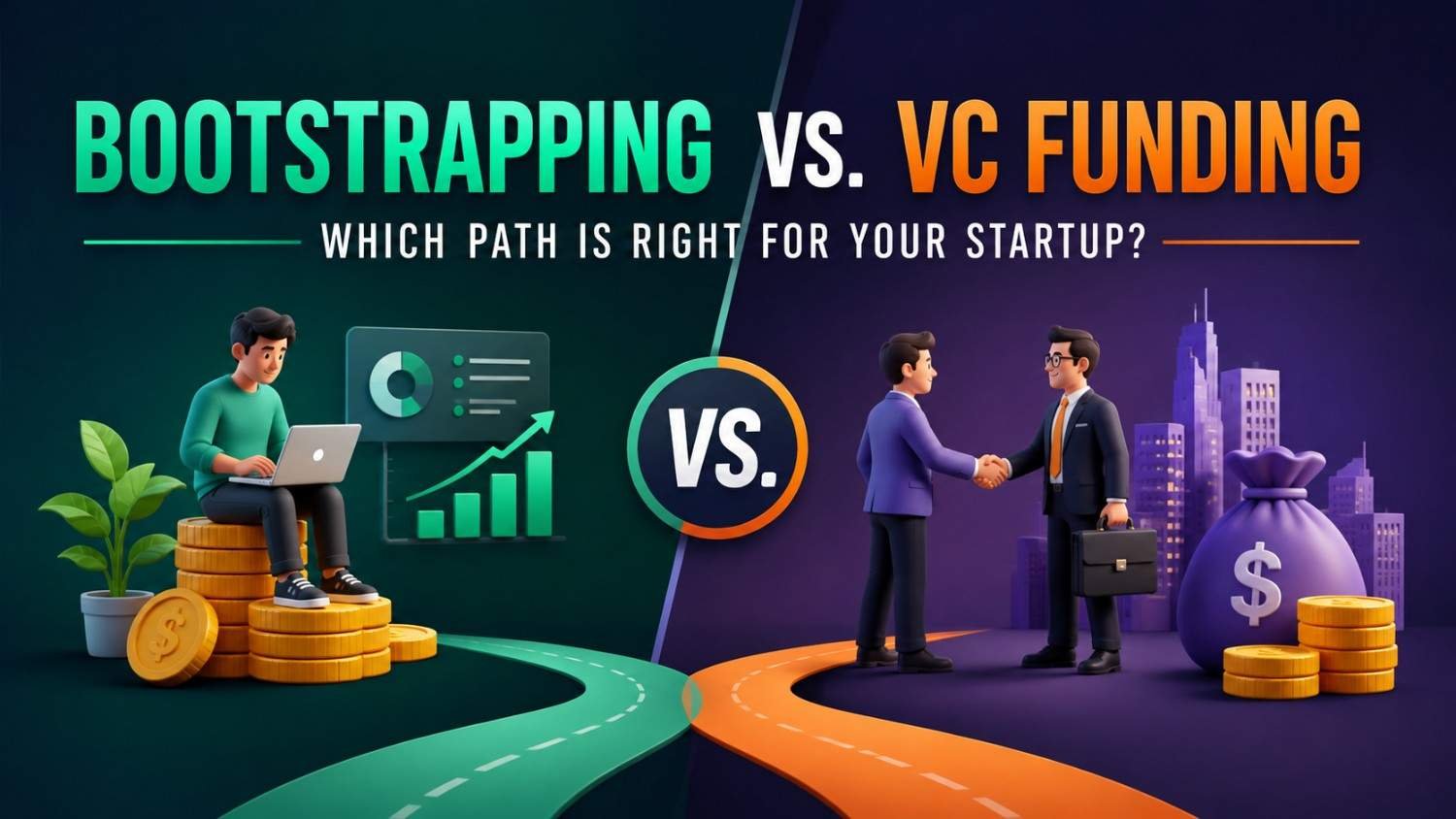
Kicking off a business is honestly one of those very exciting yet quite challenging trips an entrepreneur can take. At the start, founders usually bump into the same question, and it feels simple but it’s not— how to finance the startup. Some people decide to run things from their own savings and early business revenue, but other founders prefer to pull in investment from Venture Capital (VC) firms, mainly to speed growth. You can point to real success stories on both sides, still neither option is automatically “the best”. What’s best depends on your business model, your industry, the long- term plan, your growth expectations, and also how much you’re willing to share equity. If you pick the wrong funding style it can bring extra financial strain, lower your flexibility, or quietly slow the whole momentum.
Right now the startup world has more ways to fund a company than ever before, but the tricky part is understanding the trade-offs before you commit. Bootstrapping tends to give founders more independence and control, while Venture Capital brings bigger amounts of money, plus extra know-how from the industry and connections that actually matter. Yet, both routes also come with their own upside and headaches, so you should review them carefully. This practical guide covers Bootstrapping vs VC Funding, it breaks down the pros and cons, the best-fit situations, and the real-world details, so you can figure out which direction matches your startup better, without guessing too much . Throughout this article, naturally integrated SEO keywords include Bootstrapping, VC Funding, Startup Funding, Venture Capital, Entrepreneurship, Business Growth, Startup Investment, Small Business, Business Financing, Angel Investors, Startup Strategy, Business Scaling, Founder Equity, Startup Success, and Business Planning.
Understanding Startup Funding
Every business kind a needs resources to build products, add staff , promote services, and extend operations. Startup funding gives the financial push to reach those goals, yet the exact source of that funding, really shapes the way the business grows.
Some founders go with a slow grind, using personal savings and money from customers , while others go after outside investors to speed up expansion. When entrepreneurs understand these two routes, they can make better financial choices that match what they actually want for the company.
What Is Bootstrapping?
Bootstrapping is the process of building and growing a business without bringing in major outside investment. In most cases founders rely on personal savings , early profits, and tight cash flow management to keep things moving.
Instead of depending on investors, bootstrapped companies try to create revenue as soon as they reasonably can. That approach encourages careful financial discipline and steady growth, since every business move has a direct effect on what money is there. A lot of successful entrepreneurs like bootstrapping because it helps them keep full ownership, and also gives them total control over company decisions.
Common Sources of Bootstrap Funding
- Personal savings.
- Business revenue.
- Freelance income.
- Family support.
- Reinvested profits.
What Is Venture Capital (VC) Funding?
Venture Capital funding is basically about pulling together money from professional investment firms, in return for having a partial ownership stake in the company, not just a plain loan. In practice, venture capitalists put their money into startups they think have real momentum and can deliver strong growth outcomes, and yeah, substantial returns later on.
Also, unlike the traditional kind of borrowing, VC funding doesn’t really ask for regular repayments, not in the same way. The investors usually get paid back when the company really scales , or when it gets acquired by a bigger player, or sometimes when it goes public via a public listing. And it’s not only financial support. Many venture capital firms also bring strategic direction, hands on mentorship, help with recruitment or hiring, plus introductions to useful business contacts and partners that can open doors.
What Venture Capital Firms Typically Offer
- Growth capital.
- Strategic advice.
- Industry expertise.
- Business connections.
- Recruitment support.
Comparing Bootstrapping and VC Funding
Although both approaches help businesses grow, they differ significantly in ownership, decision-making, financial risk, and growth expectations.
| Factor | Bootstrapping | VC Funding |
| Ownership | Founder retains ownership | Equity shared with investors |
| Business Control | High | Shared decision-making |
| Growth Speed | Gradual | Rapid scaling |
| Financial Risk | Personal financial exposure | Lower personal financial burden |
| External Support | Limited | Access to experienced investors |
| Profit Distribution | Founder keeps profits | Profits shared through equity value |
Each model supports different entrepreneurial goals.
Advantages of Bootstrapping
Bootstrapping gives founders kind of full independence and it pushes them toward more disciplined business management. Since there aren’t any outside investors messing with strategic decisions, entrepreneurs usually get more flexibility to trial ideas , shift course, and grow a venture that matches their personal vision. Working with limited resources meanwhile tends to nudge efficient spending, sharper attention to customers, and more steady financial planning. When a company is funded by customer revenue , it often builds healthier finance habits, because every investment has to produce a clear, measurable return, not just vibes .
Key Benefits
- Full ownership.
- Complete decision-making authority.
- Greater operational flexibility.
- Strong financial discipline.
- Long-term independence.
For many entrepreneurs, maintaining control is one of bootstrapping’s greatest advantages.
Challenges of Bootstrapping
While independence is valuable, bootstrapping also kinda presents some practical challenges. Limited capital can slow product development, delay hiring, reduce marketing opportunities, and keep expansion into new markets from really happening. Founders often end up with multiple responsibilities at once, like managing sales, customer support, operations, finance, and product development, all with limited resources. This workload can get heavy, especially during the early stages of business growth.
Common Challenges
- Slower growth.
- Limited hiring capacity.
- Cash flow pressure.
- Increased founder workload.
- Greater financial uncertainty.
Success often depends on patience, careful planning, and consistent revenue generation.
Advantages of Venture Capital Funding
Venture Capital gives startups access to serious financial resources, which can help them move quicker with product development, run bigger marketing campaigns, and expand their team at a rapid pace. In industries that are really competitive or technology driven, businesses often need meaningful funding just to scale quickly, before competitors lock in some kind of market advantage.Also, it’s not only about money. A lot of seasoned investors bring real business know how, strategic direction, and connections to influential networks, which can make company growth feel more like a shortcut than a slow climb.
Major Benefits
- Faster scaling opportunities.
- Access to experienced mentors.
- Larger hiring budgets.
- Improved market visibility.
- Strong investor networks.
VC funding can significantly accelerate business development when managed effectively.
Challenges of Venture Capital Funding
Outside investment, even when it looks helpful, usually comes with added obligations. Founders often give up a portion of ownership and they might require investor sign off for major strategic choices. In general, venture capital firms tend to expect rapid growth, bold expansion, and clear financial results within specific time horizons. That kind of pressure can push companies to chase speed instead of long term stability. Entrepreneurs should really pause and ask if those expectations match their own personal roadmap, before they decide to pursue investment.
Potential Drawbacks
- Equity dilution.
- Reduced founder control.
- High growth expectations.
- Increased reporting responsibilities.
- Pressure to achieve investor returns.
Understanding these trade-offs helps founders make informed funding decisions.
Which Businesses Benefit Most from Bootstrapping?
Bootstrapping is often an excellent choice for businesses that can start pulling in revenue fairly quickly, without needing too much initial spend or some big upfront investment, you know. For instance , consulting firms, digital agencies, content creation ventures, software freelancers, online education platforms, marketing agencies, and a range of other service oriented companies. These kinds of businesses are usually able to expand in a steady way by leaning on customer income, while still keeping financial independence, more or less. Also, companies that have lower day-to-day operational costs tend to mesh well with bootstrapping tactics.
Which Startups Benefit Most From VC Funding?
Some startup categories need real capital first, before any meaningful revenue shows up. Venture Capital might fit better for founders working in sectors where rapid innovation, research, or infrastructure development creates heavy funding needs, and it’s not optional. Examples are artificial intelligence, biotechnology, advanced manufacturing, clean energy, fintech, healthcare technology, robotics, and large-scale software platforms. These businesses often need substantial capital in order to get the product moving , before they reach real commercial traction. In addition, fast moving markets often prefer teams that can scale quickly, and consistently.
Questions Every Founder Should Ask
Before choosing a funding path, entrepreneurs should evaluate both their business needs and personal goals.
Consider These Questions
- How much funding do I actually need?
- Can my business generate early revenue?
- Am I comfortable sharing ownership?
- Do I want rapid growth or sustainable growth?
- How important is maintaining full control?
- What are my long-term exit plans?
Honest answers provide valuable direction when selecting a funding strategy.
Can You Combine Both Approaches?
Many successful businesses, do not rely solely on a single funding model. Some founders start with bootstrapping early on, they test their business model and pull in initial revenue, before going after Venture Capital later in order to speed up expansion a bit more. That sort of mixed strategy helps entrepreneurs keep a stronger grip on ownership while they are building the product, and it also provides evidence of traction which can lead to more attractive investment chances. When fundraising is delayed until the company has already shown real market demand, founders often can negotiate more favourable investment terms and avoid an unnecessary equity dilution, or at least keep it lower than it would be otherwise.
Common Mistakes Entrepreneurs Should Avoid
Funding decisions can have lasting consequences. Avoiding common mistakes improves the likelihood of long-term business success.
Mistakes to Avoid
- Raising more investment than necessary.
- Seeking funding without validating the business idea.
- Ignoring cash flow management.
- Giving away excessive equity too early.
- Choosing investors based only on funding size.
- Expanding before achieving product-market fit.
- Failing to align funding with long-term business goals.
Thoughtful financial planning reduces unnecessary risk.
The Future of Startup Funding
The startup funding world keeps changing, i mean it’s evolving, as founders get more ways to finance ideas beyond the usual venture capital route. Things like crowdfunding, revenue based financing, angel investing, startup accelerators, government grants, and other alternative investment platforms are giving founders more flexibility than before, often with options that feel much more reachable.Instead of treating bootstrapping and VC like they’re strict rivals, lots of entrepreneurs now mix several funding approaches as the company moves through different stages. The best founders seem to care less about chasing what’s “in” right now, and more about picking the right kind of capital that fits their objectives, what the market is doing, and the long term picture they actually want.
Conclusion
Picking between bootstrapping and VC funding is probably one of the biggest strategic calls any entrepreneur will face. Bootstrapping usually brings independence, tighter financial discipline, and full ownership, which works well when a company can grow steadily using customer revenue. Venture capital, meanwhile, can bring the money, know how, and valuable networks required to scale quickly in crowded markets, but it also means founders share equity and decision making, which is not always comfortable. There isn’t one universally correct answer, there’s just the method that supports your business goals, your industry realities, and your personal vision best. If you take the time to assess what you truly need, how fast you expect to grow, and what your long term strategy looks like, you can choose a route that helps your startup stay on a sustainable track.
Frequently Asked Questions
1. What is bootstrapping in a startup?
Bootstrapping is the process of building and growing a business using personal savings, business revenue, or other self-funded resources without relying on external investors.
2. What is Venture Capital funding?
Venture Capital funding involves raising money from professional investors in exchange for equity ownership, helping startups accelerate growth through financial support and strategic guidance.
3. Which is better: bootstrapping or VC funding?
Neither option is universally better. Bootstrapping suits businesses seeking independence and sustainable growth, while VC funding is ideal for startups that require substantial capital to scale quickly.
4. Can a bootstrapped company later raise Venture Capital?
Yes. Many successful startups initially bootstrap to validate their business model before seeking Venture Capital to support larger expansion plans.
5. What should founders consider before choosing a funding strategy?
Founders should evaluate their funding requirements, desired growth rate, willingness to share ownership, market opportunities, cash flow, long-term business goals, and overall startup strategy before making a decision.
Leave a Reply