
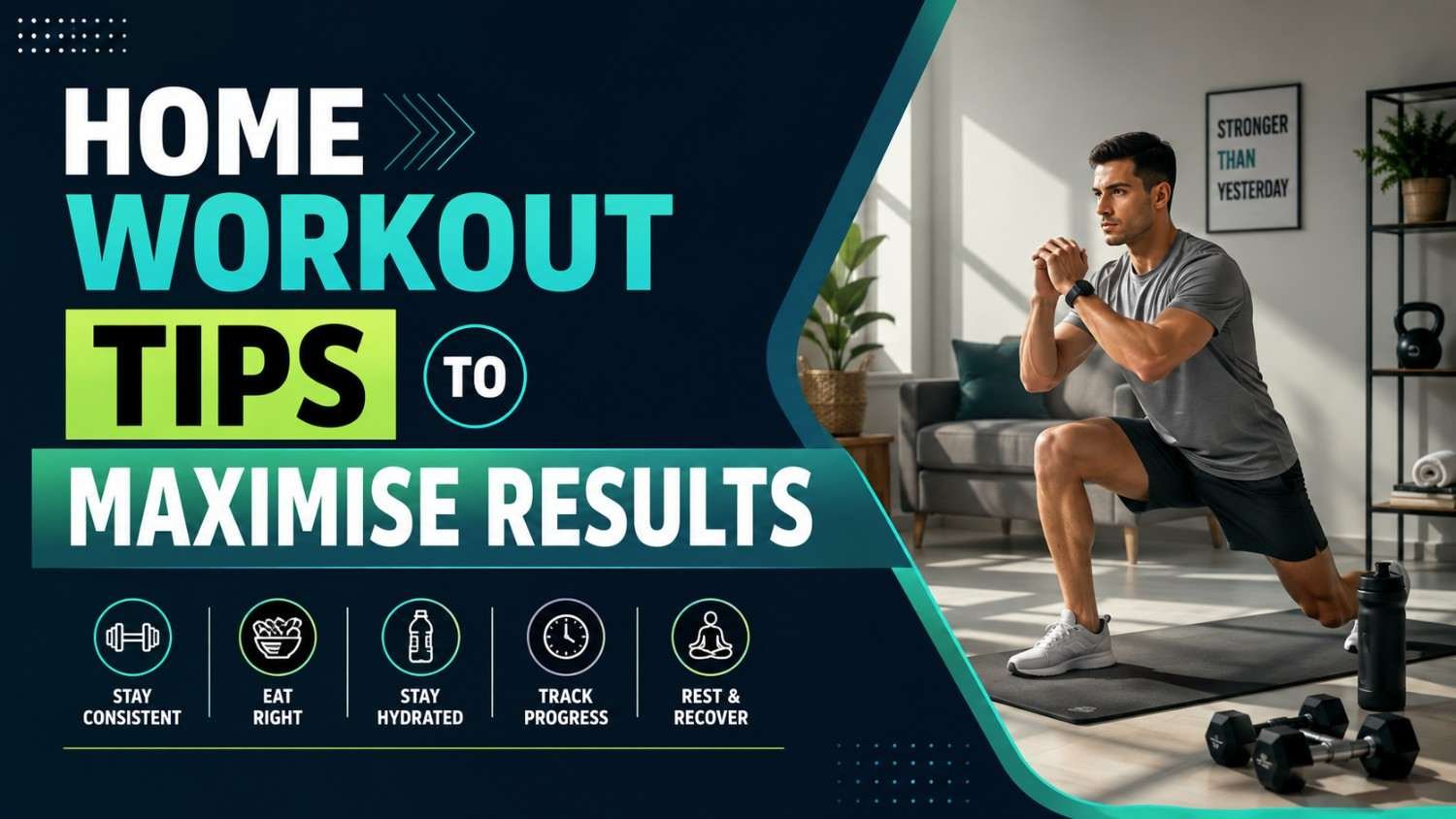
Trying to find time to exercise is kinda hard, because work , family responsibilities , the commute , and all those daily little obligations already take up your whole calendar. Lots of people want to get more fit, but they think they need a gym membership, pricey gear, or maybe even a few hours of free time before they can start. That kind of thinking can make working out feel way more complicated than it actually is. Then it turns into this loop… you plan a session, you miss it, you feel bad, and then you just stop.
Here’s the good part: a solid fitness routine can start right from home, and you don’t really need much equipment at all. What matters most is sticking with it, choosing exercises that match your needs, moving forward little by little, letting your body recover, and setting goals that are actually realistic. Basically, you don’t need an expensive workout corner. If your aim is more strength, better mobility, stronger cardio health, or just being more active overall, the right Home Workout Tips can help you build a plan that matches your real life. A practical Home Workout Routine should be straightforward enough to repeat, flexible enough for those hectic days, and still tough enough to help you build progress in steps.
Why Home Workouts Can Be Effective
A home workout kind of removes a lot of barriers that keep people from showing up consistently. You don’t have to travel to a gym, wait for equipment, or lose extra time just prepping for a workout. Honestly even a small, safe area can do the job for a bunch of movements, and you can make it work without too much fuss.
The biggest advantage of Workout at Home is convenience, plain and simple. When exercise is right there within a few steps it becomes easier to tuck short sessions into your day. If someone cannot really dedicate a full hour, they may still squeeze in 15 or 20 minutes. And those smaller chunks can turn into something meaningful when they’re repeated, regularly. A routine you can actually keep going is more valuable than a big ambitious plan that only lasts a couple days. Start with a level of effort that feels doable, then slowly raise the difficulty as your fitness gets better.
Start With a Clear Fitness Goal
Before you pick exercises, decide what you want your routine to do. Different aims need different approaches so knowing your objective helps you choose the right activities. You might want to boost overall fitness, strengthen muscle, improve mobility, support cardiovascular health, or just become more physically active. Someone interested in Home Fitness does not necessarily need the exact same plan as someone training for a specific athletic purpose.
Your initial goal could focus on:
- Building basic strength.
- Improving cardiovascular fitness.
- Increasing mobility and flexibility.
- Becoming more physically active.
- Developing a consistent exercise habit.
Avoid trying to achieve everything simultaneously. A realistic goal that you can consistently work toward is usually more useful than an extreme target that quickly becomes difficult to maintain.
Create a Simple Workout Space
You do not really need an entire room for exercise. A small area where you can move comfortably may be enough for a beginner workout at home. Clear the floor of anything that could cause you to trip, and make sure there is enough space for the movements you plan to do. If you use a chair, wall, or another household item for support just make sure it is stable.
Having a regular workout spot can also act like a psychological cue. When you repeatedly exercise in the same place, stepping into that area can slowly start to feel connected to your fitness routine
Begin Every Session With a Warm-Up
A warm up helps you transition gradually from resting into movement. It does not have to be complicated or take forever. Just a few minutes of easy motion can raise your body temperature and help you get mentally ready for what comes next. You might start with walking around the room, gentle marching, controlled arm movements, hip movements, or easier versions of the exercises planned for the session. The point is preparation more than exhaustion. A warm up should leave you ready to train, not already worn out before the main part begins
Use Bodyweight Exercises as Your Foundation
One of the simplest ways to start home strength training for beginners is to use your own body weight. Bodyweight Exercises need little or no equipment, and they can be adjusted for different fitness levels. Squats, lunges, glute bridges, push-up variations, planks, bird dogs, and calf raises can become the base for a practical routine. The key is picking variations that let you move with control, rather than jumping right into the hardest option.
Build a Full-Body Workout
A full body workout at home doesn’t really need dozens of exercises. Instead try to think in terms of different movement patterns that pull in the big muscle groups. Like you might combine a squat style movement, a pushing drill, a hip-focused effort, a core exercise, and some cardiovascular activity. That way you get variety but the routine stays pretty simple, even if it feels a little “too easy” at first. For beginners, doing a smaller number of exercises with controlled technique is often more useful than chasing a complicated routine. After a while you can bump up repetitions, sets, resistance, or just the overall difficulty , based on what you can actually handle.
Keep Your First Workouts Short
Longer workouts are not automatically better workouts. If you are new to exercising, starting with a short home routine can make consistency way easier. A short session can include a warm-up, a handful of strength exercises, a few minutes of cardio style movement, and a cooldown. Even a brief workout can help set the habit of training, you know. Then, once your fitness improves, you can slowly add time. The key is to avoid building something that feels overly demanding so you end up postponing it all the time.
Add Cardiovascular Exercise
Strength training is only one piece of a balanced fitness plan. Cardiovascular movement helps endurance, and it can also make it easier to stay more active during the day. You can do walking, dancing, marching in place, cycling, stair climbing when it fits your situation, and other cardio routines at home or near your neighborhood.
If jumping feels uncomfortable, or just not ideal for your body, then choose a low impact home workout instead. Those low-impact efforts can still count as meaningful physical activity, and you don’t have to repeat the high impact parts again and again. Choose activities you enjoy whenever possible because enjoyment can make regular exercise easier to maintain.
Gradually Increase the Challenge
Your body sort of adapts when you get exposed again and again to some physical challenge. Like, if you do the exact same workout at the exact same difficulty forever, the progress might start to crawl , and honestly that can happen. Progressive overload is basically the idea of slowly raising the challenge over time. For example you could do more repetitions, add yet another set. Or you increase the resistance, tighten up your range of motion, or you switch to a more challenging exercise variation, instead of keeping the same move.
Progress can come from:
- Increasing repetitions.
- Adding sets.
- Improving movement control.
- Increasing resistance.
- Using a harder variation.
- Increasing workout duration.
The important word is gradually. There is no need to make every workout significantly harder.
Make Exercise Work With Your Schedule
A pretty common mistake is waiting for the perfect time to move and train, like everything has to line up just right. But busy schedules rarely give you those perfect conditions. Rather than that, you can pick realistic windows where exercise can slide in naturally through your day. Some folks like morning sessions, while others feel more awake after work or later in the evening.
If your schedule is kinda unpredictable, then a home workout for busy people can be split into smaller parts. Like ten minutes earlier, then another ten minutes later, might actually work better than sitting around waiting for a completely free hour. Honestly the best plan is the one that matches your real routine, not an idealized movie version of your day.
Use Habit Stacking
Habit stacking is basically tying a new behaviour to something you already do pretty regularly. For instance, after your morning coffee, you might take a quick moment for mobility exercises, say five minutes. After you finish work, you could swap into workout clothes and start right away. And before an evening shower, you might do a short strength routine too.
A daily home exercise habit becomes much easier to remember when it is paired with an established routine. The point is to cut down the number of choices you have to make about training. Instead of asking yourself over and over, “when should I work out,” the old habit ends up acting like a cue, or reminder.
Make Busy-Day Workouts Easier
Some days, well they just dont go the way you hoped. Work deadlines, family responsibilities, travel, ugly weather, and surprise obligations can all get in the way of exercise. So instead of going full, all or nothing, try making a smaller backup routine. A 10 minute session can be a really solid option when your usual workout simply cannot happen.
You can do a few simple bodyweight exercises, take a brisk walk, add some mobility drills, or even break your movement into several tiny chunks through the day. The point isn’t flawless performance , it’s keeping that habit alive even when life gets weird or busy.
Do not skip Mobility and flexibility
Strength and heart health matter , for sure, but moving comfortably matters too. Mobility work can fit before a session, after a session, or during those breaks from sitting for too long. Gentle motions for the shoulders, hips, ankles, and spine can keep you moving regularly all day. Flexibility varies from person to person, so don’t force a stretch, and don’t bounce aggressively either. A basic balanced at home fitness plan should support strength, stamina, mobility, and recovery, instead of only chasing one goal
Schedule Recovery
Exercise is the physical push, but recovery is when your body catches up and adapts. Sleep, food, water, rest, and a reasonable training volume all affect whether you can keep going. If you’re constantly drained, unusually sore, or having trouble with normal daily tasks, you may need to adjust the routine. More training isn’t always the answer. Recovery should be treated as part of your Home Workout Routine, not as a thing that only shows up when you can’t work out.
Know When to Increase the Difficulty
Your current routine might eventually become more comfortable. It’s not a problem, it could be a hint that your fitness has gotten better. If you can keep doing your exercises with solid technique, and the session doesn’t feel challenging enough anymore, then try slowly adjusting repetitions, sets , resistance, or even the overall exercise difficulty. Just don’t raise every variable at once. Small changes make it clearer how your body reacts and they help lower the chance of doing too much too soon.
Track Your Progress
You do not need pricey tech to keep track. A simple notebook , or a phone note, is enough to log what you did, how many reps you completed , the duration, and how hard the workout felt. After several weeks, this kind of record often shows improvement that isn’t obvious day by day. You may notice you can do extra repetitions, move longer, recover more smoothly, or handle everyday tasks with more ease. Progress isn’t only about body weight or looks. Better consistency, strength, endurance, mobility, and self-assurance all count as real results.
Follow Basic Exercise Safety
Training at home is convenient but safety still matters. Pick movements that match where you are right now, and don’t jump into advanced variations just because they look impressive online. Before you start, scan your space, make sure any furniture or household items you lean on are stable and not wobbly. If you have an injury, ongoing pain, a medical condition, or specific health concerns, talk with a qualified healthcare or exercise professional before starting a new program. Online fitness content should not be treated as personal medical guidance.
Stay Consistent Instead of Chasing Perfection
The most important part of any Workout at Home plan is consistent, right? Like, not just when you feel motivated, but more like sticking with it. Missing one workout doesn’t magically erase your progress, and a slightly messy week, doesn’t automatically mean your whole routine is done. The issue shows up when one missed workout turns into several weeks of inactivity because you feel you “fell off track,” or something similar. In that case, instead of overthinking it, simply return to your routine at the next realistic opportunity. Your fitness journey doesn’t need to be perfect, to be a win. It needs to stay sustainable, in a real world sort of way.
A simple weekly home workout structure
A beginner-friendly plan can mix strength training, cardio-style activity, mobility, and recovery, instead of repeating the exact same session every single day. For example, you could pick three days for strength, two days for lighter effort, one day for enjoyable movement, and one recovery day.
A sample structure could look like:
- Monday: Full-body strength.
- Tuesday: Walking or light cardio.
- Wednesday: Strength and mobility.
- Thursday: Active recovery.
- Friday: Full-body strength.
- Saturday: Walking, cycling, dancing, or another enjoyable activity.
- Sunday: Rest or gentle mobility.
This is only a starting framework. Adjust it according to your fitness level, goals, schedule, and recovery needs.
Common Home Workout Mistakes
Many people make their routines unnecessarily difficult by trying to do too much too soon. Starting with advanced programs, exercising through pain, ignoring recovery, or constantly changing workouts can make exercise harder to sustain.
Common mistakes include:
- Starting with excessive workout volume.
- Copying advanced workouts without modification.
- Ignoring technique.
- Skipping recovery.
- Expecting immediate results.
- Comparing your progress with others.
- Treating one missed workout as failure.
A consistent easy home workout for beginners is usually a better starting point than an intense program that cannot be maintained.
How to Stay Motivated
Motivation, like it naturally does, will change—so you shouldn’t make your whole exercise routine depend on feeling driven every single day. Instead, make working out convenient, pick activities that you genuinely like, keep your aims somewhere you can actually see them, and really lean into consistency rather than chasing perfection. If you start to feel bored sometimes, you can switch things up a little , now and then. Things like music playing while you move, walking outdoors, using workout videos, or even training with a friend can turn a session from “ugh” to something more, you know? Over time, the whole point is to build a relationship with exercise that starts to feel like a normal part of everyday life, not just another obligation.
Conclusion
A good home fitness routine doesn’t need expensive gear, a gym membership, or long stretches of free hours. If you use practical Home Workout Tips, select fitting Bodyweight Exercises, slowly raise the challenge as you go, schedule movement around your actual lifestyle, and give yourself enough time to recover, you can create a plan that is both effective and sustainable. Whether you want a home workout without equipment, a quick strength session, a full body workout at home, or a mix of cardio and mobility, the main idea stays the same: consistency beats complexity. Start small, focus on moving safely, watch your progress, and tweak the routine as your fitness grows. Ultimately, the best workout plan is the one you can actually keep doing, week after week, for the long run.
Frequently Asked Questions
1. Can I get fit with a home workout?
Yes. Consistent strength, cardiovascular, mobility, and bodyweight training can improve general fitness without requiring a traditional gym.
2. What is the best beginner workout at home?
Beginners can start with squats, glute bridges, wall push-ups, lunges, core exercises, walking, and gentle cardio while learning proper movement technique.
3. Can I build strength without gym equipment?
Yes. Home strength training for beginners can start with bodyweight resistance and gradually progress through harder exercise variations, increased repetitions, or additional resistance.
4. How long should a home workout be?
There is no universal duration. A short session can be valuable, particularly for beginners, and duration can gradually increase as your fitness and schedule allow.
5. How often should I exercise at home?
The ideal frequency depends on your fitness level, goals, and recovery needs. A balanced routine with regular movement and adequate recovery is more sustainable than exercising intensely every day.
Leave a Reply